Editors Note: 2026 Nationals is hosted in collaboration with the Blackburn Challenge. Register today at capeannrowingclub.com!
The first boats arrive before the light changes. Trailers in the parking area, hulls upright, paddles still banded together. A few athletes are already on the beach, not warming up, just watching the water. It is doing what it does. There is no way to know yet whether it will cooperate or not.
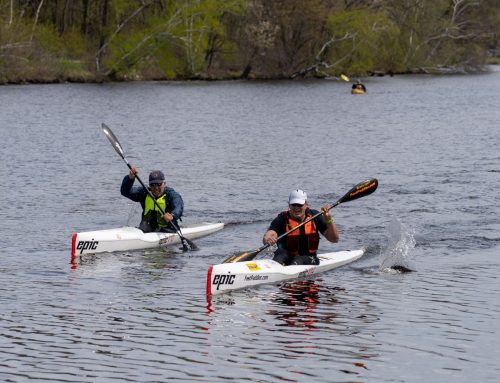
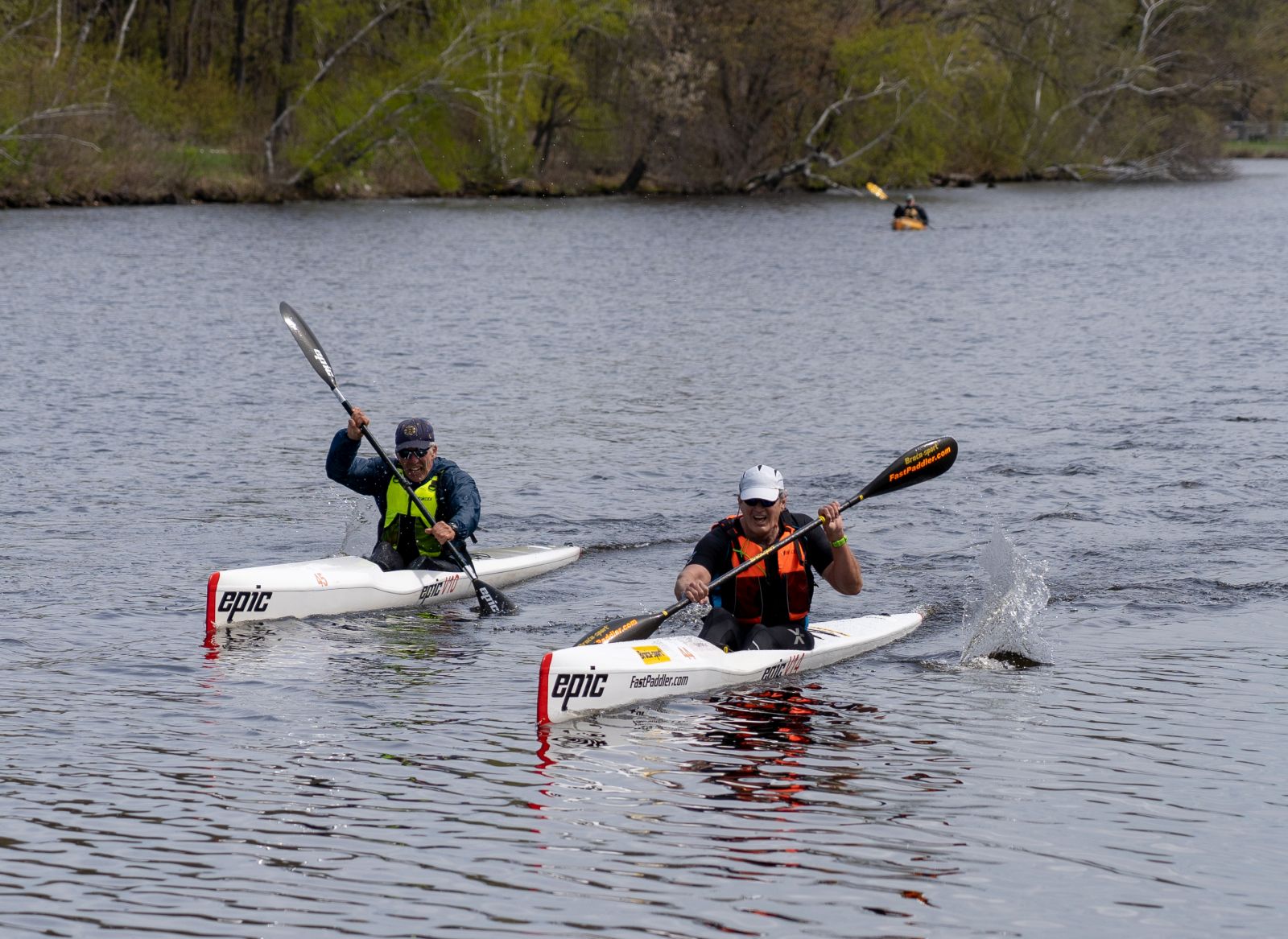
By mid-morning the start zone is full. Dozens of surfskis are in the water. Some are running laps. Some are sitting quietly, drift-correcting with small paddle touches while their paddlers look toward the horizon or down at the surface. The conditions are the same for all of them. That fact is not remarkable, but it matters.
A national championship in ocean paddling is not primarily about the fastest paddlers. It is also about them, but that’s not what defines the event. What defines it is the test itself: a specific stretch of ocean, on a specific day, asking the same questions of everyone who starts. How you handle what comes up. Whether your preparation holds. Whether the water gives anything or takes something. These questions are not answered in advance.
This is why convergence happens. Not because any single outcome is guaranteed, but because the shared exposure is real. Athletes at the front of the field and athletes forty places back are encountering the same swells, reading the same sky, making decisions under the same uncertainty. The test is common. The interpretations diverge.
Nationals arrives once a year. For many paddlers it marks the season. Training builds toward it in ways that other events don’t quite organize around. Results persist in a way that local race results often don’t. A performance at Nationals tends to reframe what comes before and after it, not because the event demands that, but because it offers comparison at a scale that most paddlers rarely encounter. How you do at Nationals is a data point that stays in the body.
The field at a national championship spans a wide range of capability. Elite paddlers are there. So are paddlers who have been in the sport for a few months, paddlers who have paddled for decades, paddlers making their first attempt at a longer course, paddlers returning after years away. Surfski is a sport with deep participation across many levels. All of them are in the same water, facing the same version of the test. That spread is not incidental. It is part of what makes the event legible.
There is also something that happens when the whole domestic field gathers in one place. Conversations that wouldn’t happen in a regional context. Equipment that shows up here before it shows up anywhere else. Paddlers who have only known each other through results suddenly in the same launch area. The event generates a kind of knowledge that can’t be replicated by any individual race. It’s cumulative. It’s calibrating. You leave understanding where you stand in relation to the sport as a whole, not just your local paddling circle.
Most of that understanding doesn’t come from the podium. It comes from finishing. From what the day asked and how you answered. From seeing the field assemble and spread and reconverge at the finish and realizing that the test was real, and you took it.