Finishing well has little to do with who is most tired. Everyone is tired. What separates paddlers at the end of a race is not how much they have left, but how clearly they can still act with what remains. The finish is rarely a single effort. It is a sequence of choices compressed into the final minutes.
Many races are lost by starting the finish too early. A long, desperate sprint blurs judgment and invites others to respond efficiently. Once effort spikes beyond recovery, options disappear. The paddler becomes committed to a line and a pace that may not be optimal. Good finishes are delayed until position, distance, and context align.
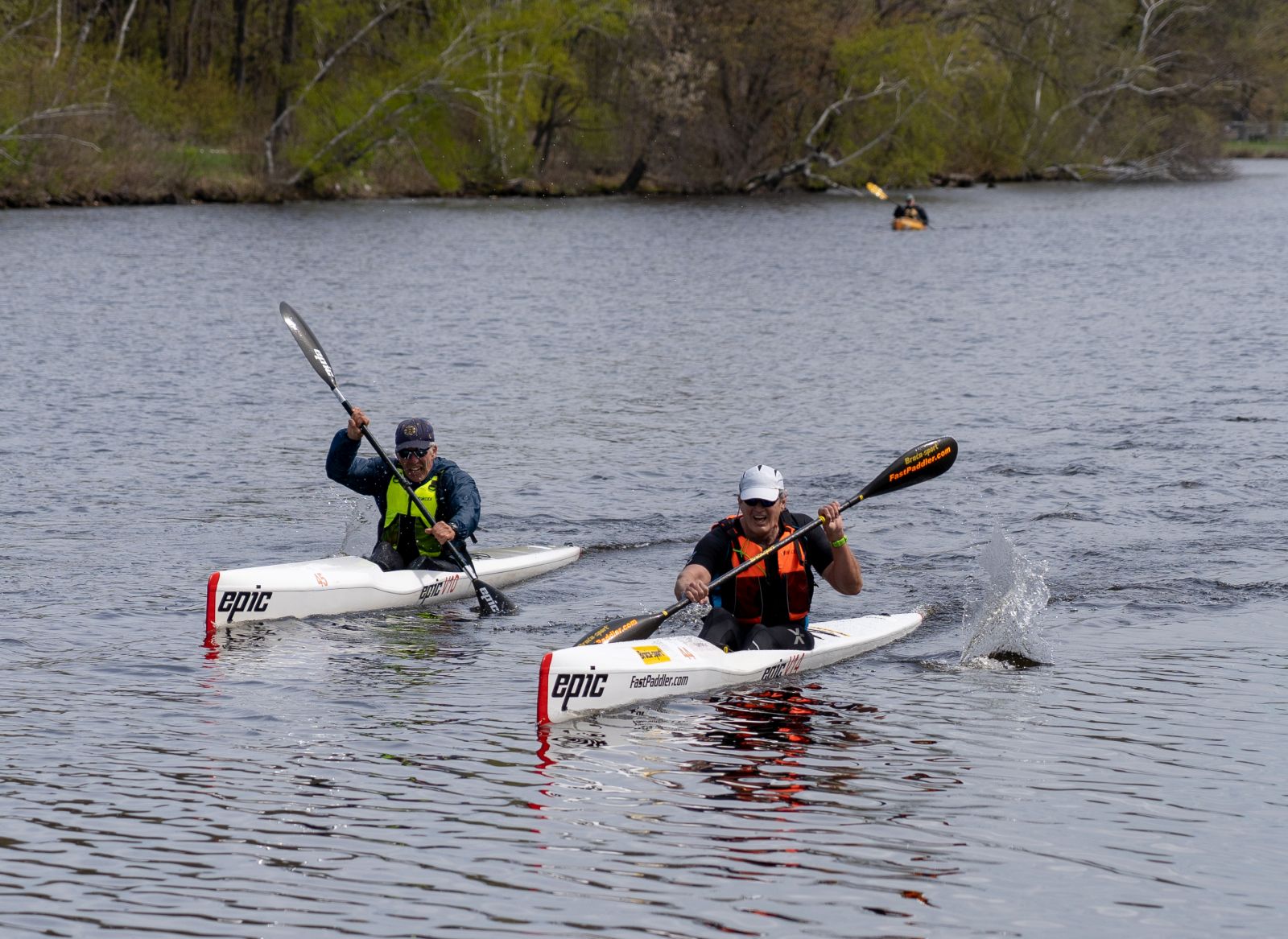
Position matters more than speed. Being on the correct side of a competitor, in clean water, or on the favorable line often decides outcomes before the final acceleration even begins. Experienced racers spend the closing kilometers quietly arranging themselves, forcing others to respond while conserving just enough to act last.
There is also discipline in restraint. Not every finish needs to be contested. Sometimes the correct decision is to protect a gap rather than extend it, or to secure a place rather than gamble for one more. Understanding when the race is truly still open—and when it is not—is part of finishing well.
When the moment does arrive, execution should feel simple. The paddler commits, not because emotion demands it, but because the race has narrowed to a single clear action. The best finishes feel almost calm. They are decisive, not frantic.
Racecraft reveals itself most clearly here. Not in dramatic moves or heroic suffering, but in how little is wasted when it finally matters. That is the quiet thread running through this entire series: fewer bad decisions, better timing, and respect for the complexity of racing on open water.