By Wesley Echols
I have paddled a wide range of skis over the years from advanced to beginner in all types of conditions. Below are some helpful hints on becoming more stable in your ski.
- Boat Choice: think about the conditions that you will be paddling in the 75% of the time. More than likely this is the water the is most convenient to you, near your home, easy access, etc. So if live on a lake or river then you may enjoy a faster, tippier ski since you are paddling on “flat” water. If you live on the ocean then you probably should get “stable ski” in the novice or intermediate range to be safe and enjoy the whole experience. Ideally you would have a flat water ski, and an ocean ski if you plan on paddling on flat water and ocean. Once you have mastered the novice, intermediate boats in the ocean you may want to buy a “faster ski” but often less stable. Regardless of skill level, many advance skis require that you be in them 2-3 times per week for ocean paddling in the conditions you maybe racing in. You have to put your time in the bucket. There are other factors to in boat choice that I have written about in the past such as Age, skill level, risk tolerance, athleticism, frequency of paddling, boat weight, and the big one, “what is your goal in paddling”. Is it exercise, racing, social, etc.
- Once you have your ski, setting it up properly is critical. Set the foot plate, toe pedal angle, and any padding you may add, depends on the shoes you wear, clothing(drysuit, shorts, etc). Too long in the leg length and you will not have good leg drive and you can be unstable, to short and you will be cramped unstable and oversteer. Experiment with this. I just recently got my NK Rapido and I have change the footplate length 2x and the toe peddle angle 3x. Now after 50 miles, I have it set up perfectly. More narrow boats have a very small window of adjustment that can be critical in your stability on the water. Wider skis are are inherently more stable so you have some more flexibility in the set up.
- Rudder size, shape and angle matter, so get a flat water rudder and ocean rudder. The bigger the rudder the more stable you are, but you increase the drag. So it can be a trade off. Don’t show up with a 4 inch rudder expecting to be stable in ocean conditions unless you have been training with it.
- You need to practice your boat handling skills to increase your stability. How do you do that? Practice the different types of strokes during training. The obvious is the forward stroke but these strokes are keys to stability when you need them: drag brace, hard brace, emergency stop brace, forward sweep, reverse sweep, reverse stoke. You need to be able to connect these different strokes depending on the conditions. You need to take a lesson from an instructor for these. This will significantly reduce your learning curve. If you don’t, you may flounder for years trying to figure something an instructor pointed out in a few seconds. I came up through the sea kayaking training, BCU and ACA that were immensely helpful when I transitioned to surfskis. Once you practice these strokes, you will be more stable, more efficient, safer, and be more confident in ocean paddling conditions.
- Choose the “right” paddle, not to big, not to long, not to technical. Play with the angle, 45-60 is mostly typical and the length depending the boat, conditions, your skill level and your body size and power. Put stoppers on the paddle or paddles so your hands do not slide up and down the shaft. You want them in the same place all the time. Generally, the shorter the paddle the more stable you are. You can exit more quickly, brace more quickly, have a faster turnover. We are only talking a few centimeters so 208 to 210 once you have settled on your range. I am short so shorter paddle length suits me. Your range could be 210 to 213, etc. I have gone as short as 206 for one Blackburn years ago and was fine. Now I am at 208 to 209 regardless of what ski I am in and use a 60 degree feather. Years ago I use a 45 degree for a year but went back to a 60 for more power.
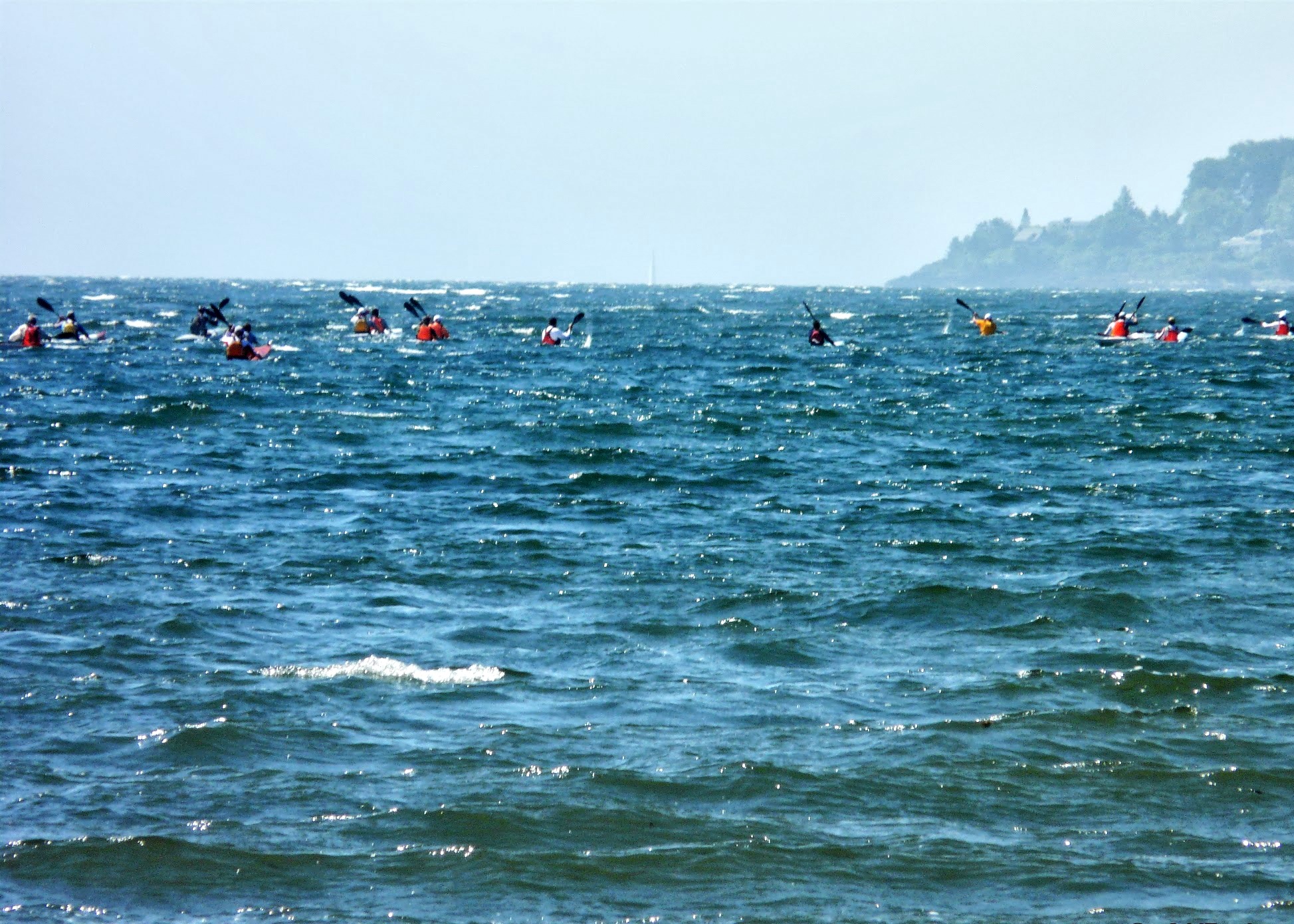
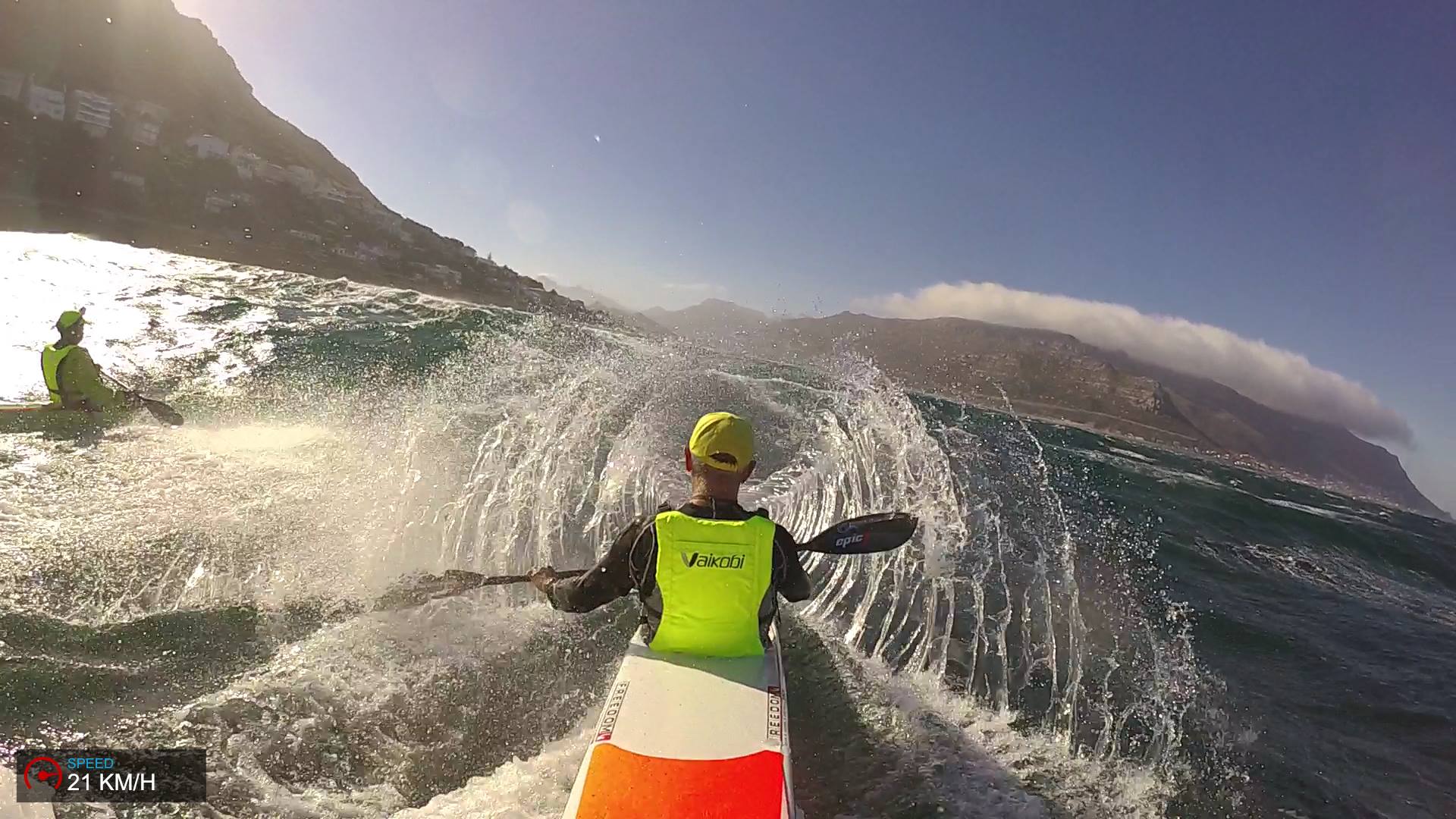
- Once you have bought your ski, paddle, leash, pfd and have it all set up now start paddling. Do not limit yourself to going up and down the river, stretch of ocean, etc. You want to practice turning at speed, turning on top of a wave, paddle in a headwind, downwind, beam, quarter beam, refractory waves, chop, rafting up, remounts etc. Conditions don’t have to be big or even moderate, but just mix it up often so you become accustom to paddling in these conditions. This way, you learn to trust your ski, and ultimately trust yourself in these conditions. Once you become comfortable in these very small conditions, then seek out slightly more challenging conditions for you personally. What maybe challenging for you maybe a piece of cake for someone more skilled. So do not be talked into conditions you are not ready for. You want to slowly increase your skill level where you have to pay attention, rarely brace, without it turning into an anxiety provoking paddle, Slow and gradual with being SAFE. This should be in a safe protective area. Many years ago when I got my first ski, a Mako XT, all I did for a week was go back and forth parallel to my beach learning to paddle in beam conditions with power. Then as I became more comfortable I went out on slightly windier days with bigger conditions doing 180’s, surfing into the beach, launching off the beach, paddling in the beam and quarter beam until I got ready to leave beach area and venture out more.
- Also paddle when you are tired. Your core is tired, you are less confident but you learn to paddle when you are tired and able hold it together when conditions are challenging. Today for instance, I was tired after my 11 mile paddle two days ago in my S18SX in moderate conditions, racing in a 9.5 mile race 4 days ago. So I decided to paddle my Rapido in one foot seas knowing I would have to pay attention to my stability as opposed to paddling one of my more stable skis. During this paddle, I also realized I was oversteering(#2) due to my foot pedals being angled slightly too far forward and was more unstable than I thought I should be. So I adjusted the pedals and boom, more stable, more comfortable and faster.
- In conclusion, becoming more stable is not just getting a stable ski, its the set up of your boat and paddle. Using the different strokes(not just the forward stroke) to increase your boat handling and practicing in safe but varied conditions slowly increasing your skill level over time. Your knowledge of ocean conditions(tides, currents, wind, obstacles, ocean depths, waves, etc should be increasing over time so you know if your current skill set matches the conditions of that day. If not, don’t leave the beach and come back another day to train.