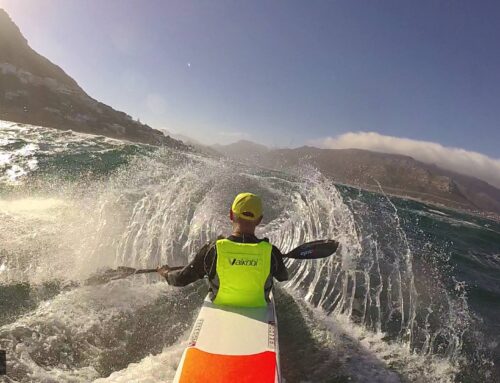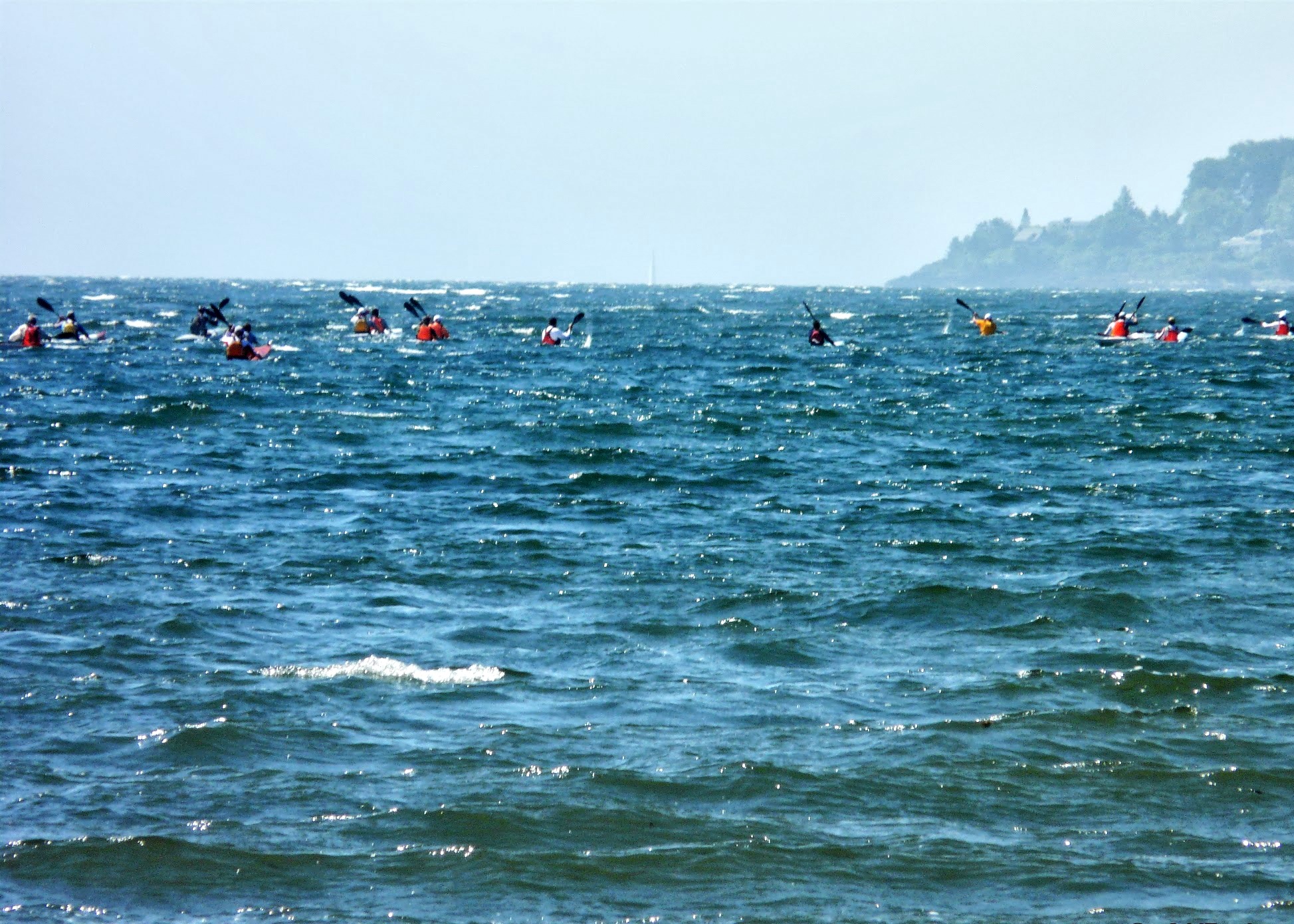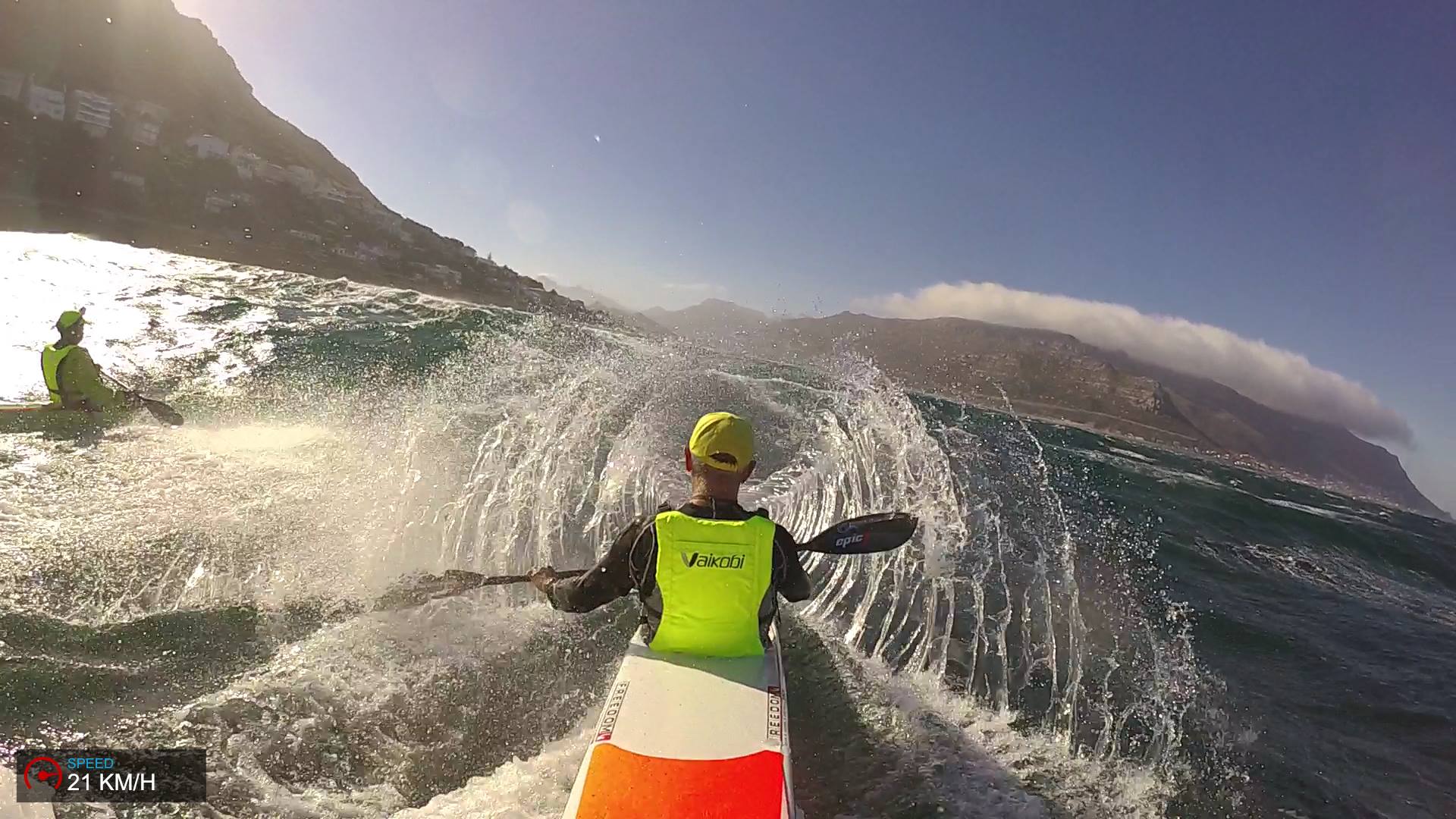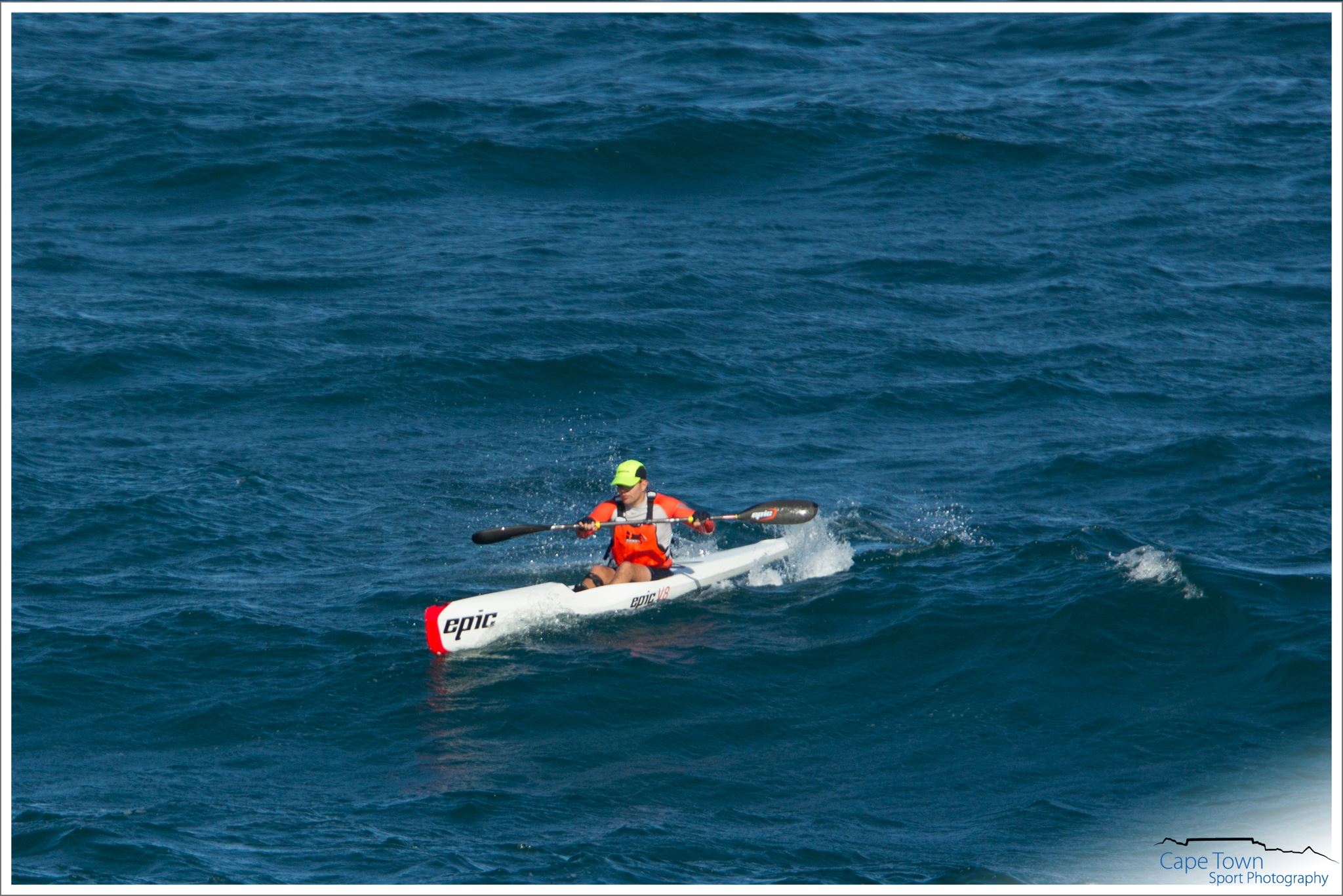
The difference between flatwater paddling and downwinding isn’t subtle. Grinding a flat stretch is the opposite: all work and no rest, every foot of distance earned stroke by stroke with nothing free about it. Catching a wave takes a handful of hard strokes, sometimes just one, and then the boat rides on the ocean’s energy. The whole run comes down to managing that work-to-rest ratio: a hard burst to connect, then recover while the wave carries the boat. Wash, rinse, repeat.
On a short run, that burst of activity can come from a genuinely harder gear than most paddler can maintain over a longer session, so catching often feels more explosive on a short run. A long crossing can’t pace itself the same way. Pull that hard on every bump for three hours and the tank empties long before the final waypoint arrives. Still, the strategy doesn’t change: reach for every bump, ride each as far as possible, because that’s still overwhelmingly the correct play at any distance.
Twenty miles of open downwind will run faster than twenty miles of flat water for the same paddler on the same day. A trained athlete can maintain eight or nine miles an hour or more on the runs against six or seven on the flat, because most of the momentum comes from the water’s energy instead of the paddler. Whether that difference holds for the whole distance comes down to how many times the same interval, a hard burst then a ride, can be repeated at full quality before fatigue sets in and misses begin occurring.
A short run rarely asks for enough repetitions of the interval for that decline to show up, and rarely asks a paddler to pace for hours instead of minutes. A long run asks for both. The strategy underneath it is nearly identical at every distance. What differs is how hard the work phase can go, and how many times it has to go before something gives.