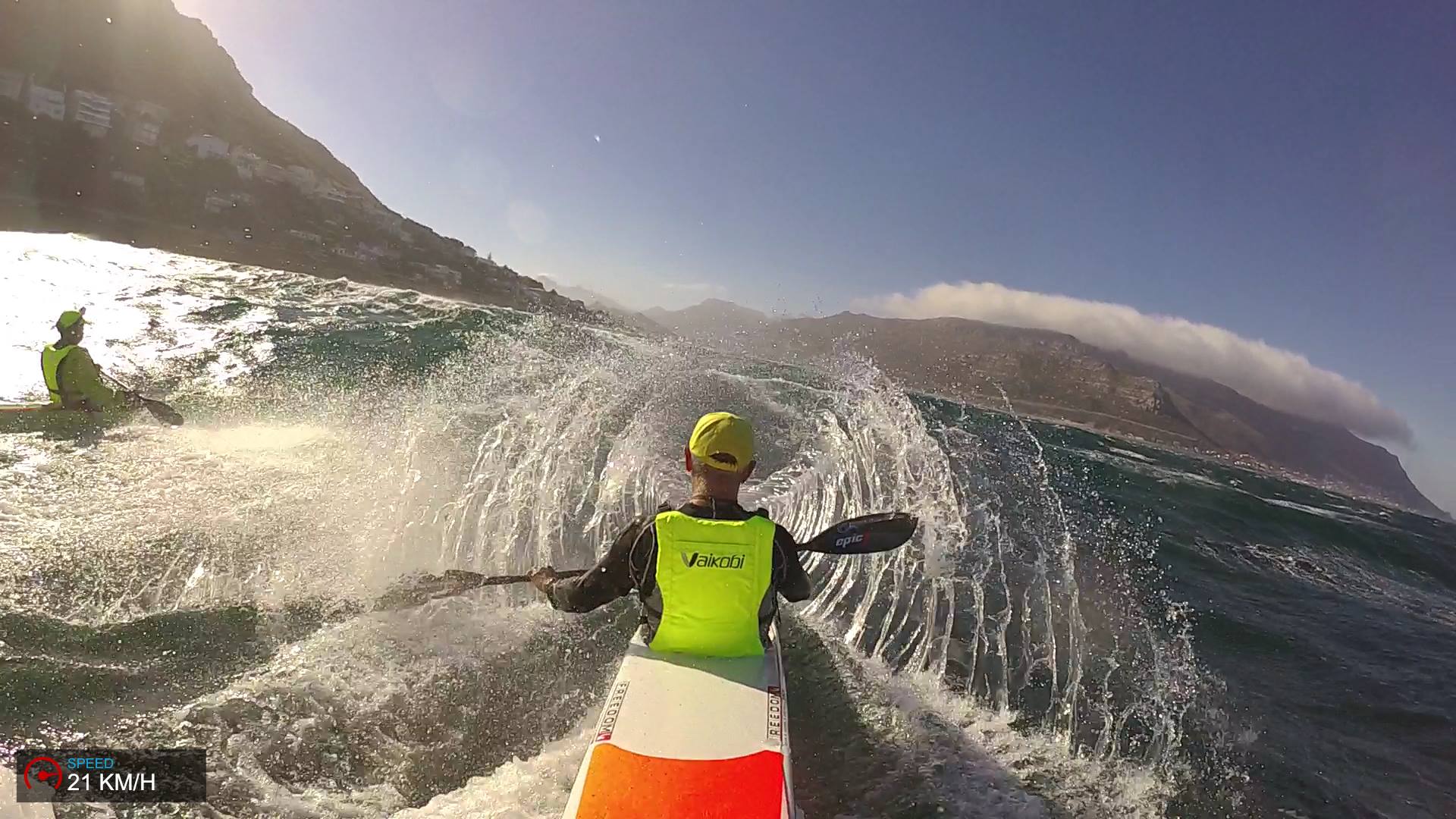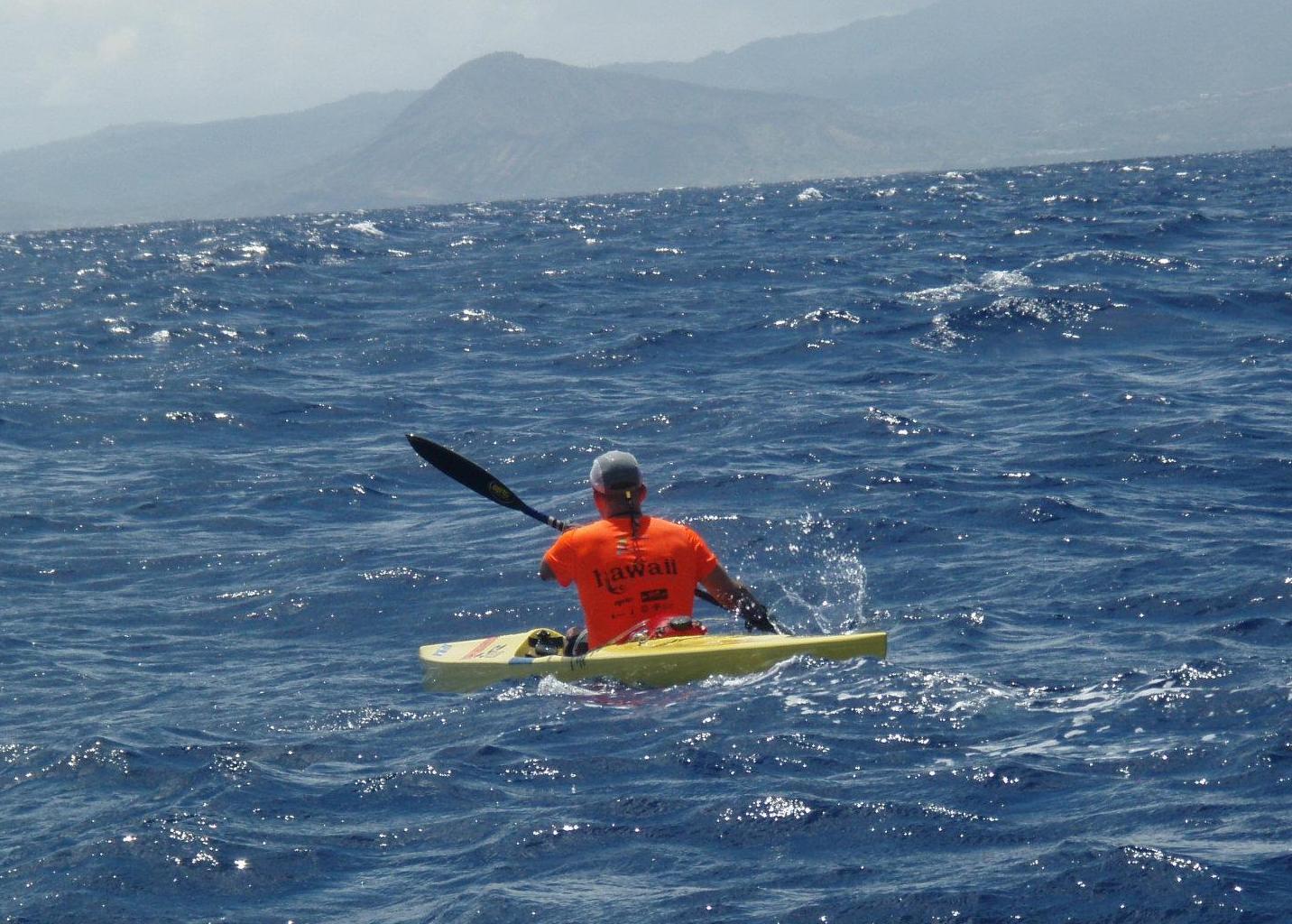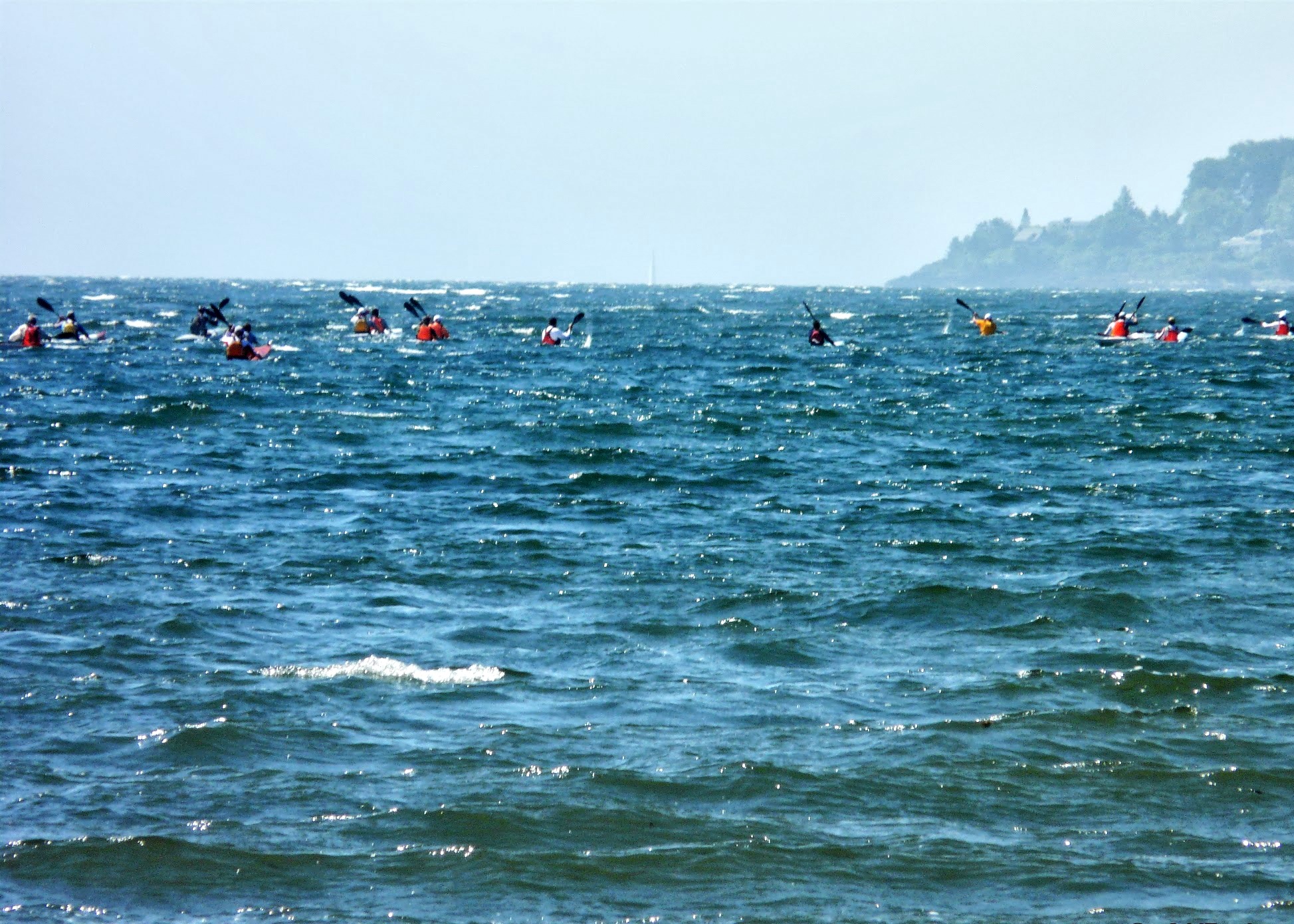
From the parking lot the water looks like nothing worth the drive. Wind chop runs in from the southwest, a leftover groundswell rolls in from the southeast, and where the two meet the surface has no grain to it at all. Somebody at the ramp says he’s going to do intervals on the flat side of the point instead. The forecast agrees with him. You launch anyway, mostly because the drive was long enough that turning around feels worse than getting wet.
The first ten minutes confirm the read from shore. A swell lifts the tail and you put in three hard strokes to take it, and a steeper wind wave slides in from the right, shoves the stern sideways, and swings the bow off the face before it ever drops. The rudder is hard over half the time. Every few strokes you lean the hull toward the incoming chop to keep it from tripping the boat, and the stroke on one side keeps coming in short because it’s doing double duty as a correction.
Then a ride happens that you didn’t plan. A swell and a wind wave arrive at the same patch of water a beat apart, and a peak stands up under the seat higher than either one could make alone. The ski runs off it at an angle that matches neither the swell nor the wind, a diagonal that exists only where the two trains cross, and it holds for six or seven seconds before the peak collapses and you’re back in the slop.
After that the water starts to look different. You begin to notice the pyramids where the two systems stack, popping up and folding back down at irregular spots ahead of the bow. They don’t repeat in any pattern you could memorize. The swell gives you a rough timing and the wind waves give you a direction to lean, and the catchable bumps are wherever those two happen to overlap in the next few seconds. You go for nearly all of them, same as on a clean day, and plenty come to nothing. The ones that connect carry you somewhere the straight downwind heading would never have gone, and the next peak is often waiting off to that side.
Your hips never get the rest a clean day gives them. On organized swell the hull settles into a rocking you can stop thinking about inside of fifteen minutes. Here the boat gets pushed from two directions on two different rhythms, and the only way to keep paddling through it is to let the pelvis move under the shoulders and quit bracing against every shove. By the second hour the rudder input is smaller, the lean is coming from the seat instead of the arms, and the short stroke has gone back to full length.
Clean days are better for speed, and most people’s best times come from them. They never ask you to find a ride with nothing on the surface pointing to it. Some morning next spring a tidy northwest run will go sideways halfway down when a southerly swell wraps around the point, and you’ll start looking for the pyramids while everyone around you is still waiting for the lines to come back.