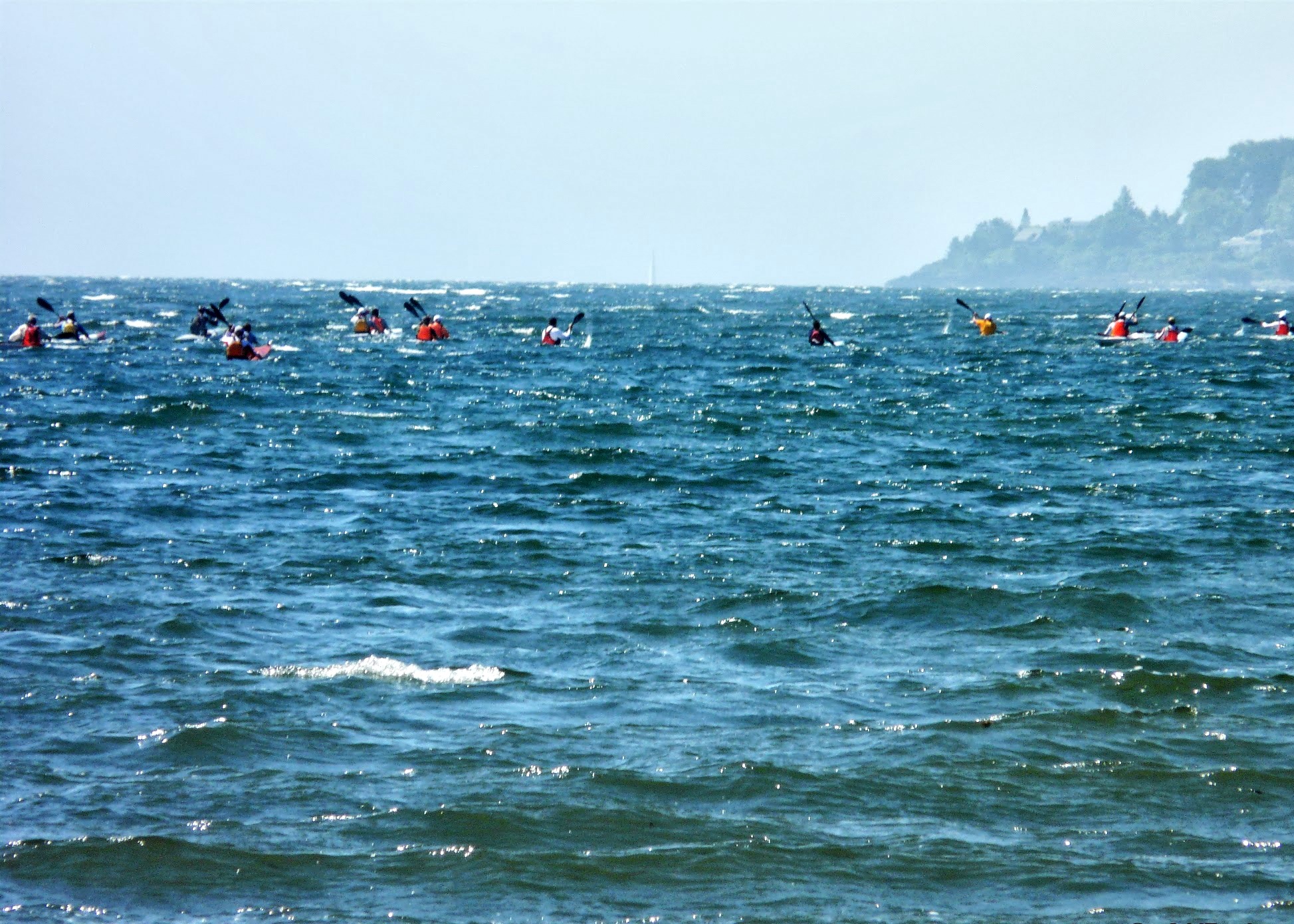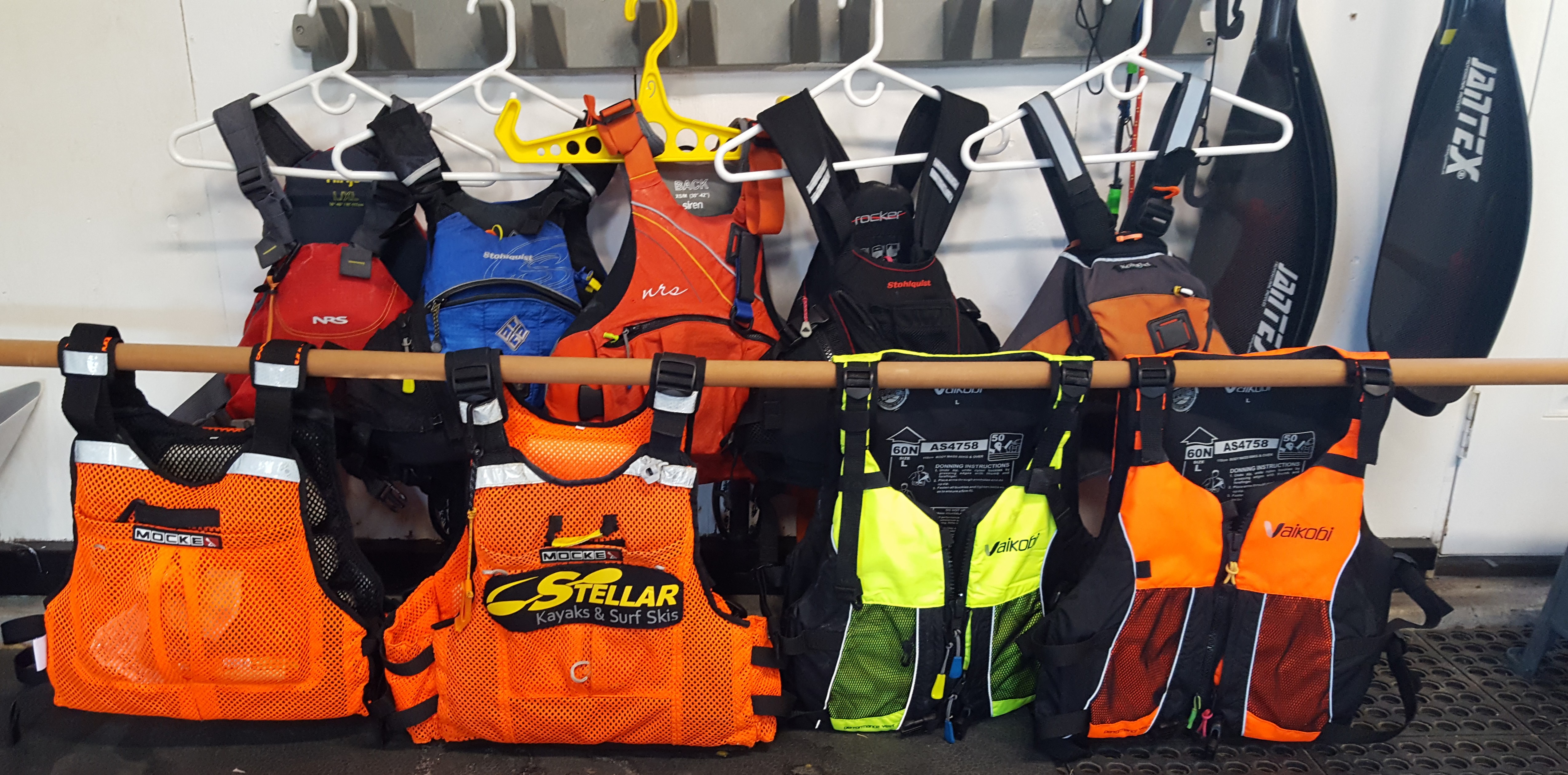
Downwind runs push a paddler several miles offshore. Training sessions run the same distances in the other direction. Racing happens in conditions that include the real possibility of multiple capsizes, and the conditions that flip a surfski tend to be the same conditions that make swimming uncomfortable. In that context, the interval between entering the water and getting back on the boat is not always measured in seconds.
The surfski is built as a self-rescue platform. Capsize is expected and planned for; the remount is a practiced skill rather than an emergency procedure. But for those seconds, or the longer interval when things aren’t going smoothly, something is doing the floating. That something is the PFD, doing its job quietly and without drama, in the gap between water entry and getting back on the boat.
A Type I or Type II device, the offshore lifejackets designed to turn an unconscious person face-up in open water, handles that job well. The design requirements for that capability produce something that sits high on the chest and shoulders and resists arm movement. Put one on and take a paddle stroke. The shoulder rotation is reduced. The zone that a paddle stroke depends on is occupied. After a few strokes, the PFD becomes the central fact of the session rather than part of the background. This is not a design flaw. It is the result of a design priority that does not include paddle sports.
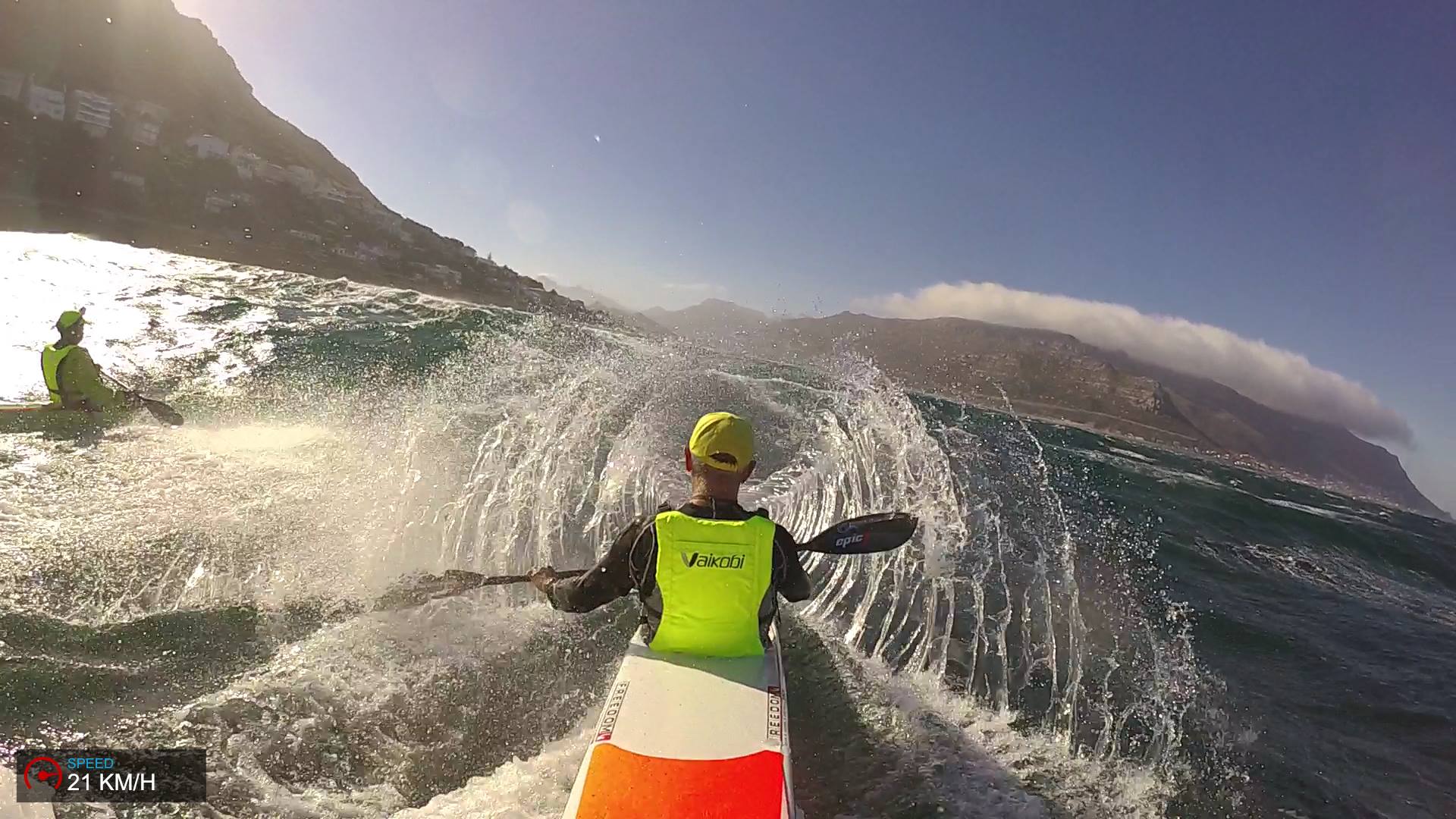
Type III and the paddling-specific vests in that category solve the same problem differently. Foam panels move lower on the torso, away from the shoulder zone. The back panel is often mesh or largely absent, which opens up the rotation arc a stroke depends on. The device still provides the required buoyancy. The paddler wearing a well-fitted paddling vest, in most cases, stops being aware of it within a few minutes of launch.
That disappearance is not a cosmetic detail. There is a pattern that most experienced paddlers eventually recognize, sometimes about their own habits and sometimes about what they observe at the put-in. Gear that interferes with the primary activity becomes gear that gets left on the dock, unzipped after the first few minutes, or simply left in the car when the session feels short and the water looks manageable. A PFD that fits and moves with the stroke does not accumulate that friction. It gets worn.
This is why fit is not a secondary consideration in this category. It is, in practical terms, the first one. The buoyancy rating matters. The Type classification matters. But a device that meets the regulatory requirements while reducing the quality of the paddle stroke has not solved the problem in the way the problem needs to be solved. The calculation is circular: a PFD that doesn’t get worn offers the same protection as no PFD.
The paddling-specific market has moved toward low-profile designs with mesh backs, zippered entries, and minimal foam in the shoulder zone. The reason is not fashion or aesthetics. It’s that paddlers, observed over time and in aggregate, tend to wear what lets them paddle. A design that gets left on the dock is not a safety design, whatever its rating.