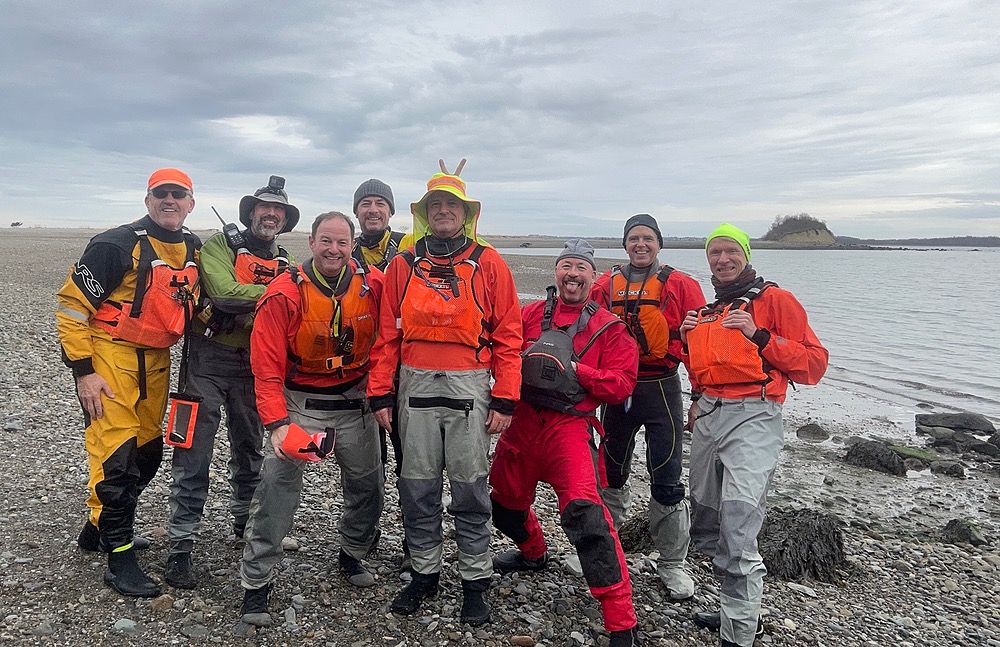
Cold water does not simply raise the stakes. It changes how decisions are made. The physics of the run may look familiar, but perception, timing, and tolerance for error shift in ways that are easy to underestimate if you focus only on conditions above the surface.
In warmer months, small mistakes are absorbed. A missed link costs speed. A sloppy remount costs time. In cold water, those same mistakes carry a different weight. The margin for recovery narrows, not because the paddler is less capable, but because the body and mind respond differently under stress. Fine motor control fades sooner. Breathing becomes more deliberate. The window for calm problem-solving shortens.
This alters how downwind choices should be approached. Lines that are acceptable in summer may feel unnecessarily exposed in spring. Aggressive positioning that relies on quick correction becomes harder to justify. Even steering inputs feel different when hesitation carries consequences. Cold water does not forbid risk, but it makes the cost of misjudgment more immediate and more personal.
Perhaps the most significant change is cognitive. Cold compresses time. Decisions feel rushed even when they are not. This leads paddlers to simplify, sometimes productively and sometimes too much. The tendency is either to over-control the boat to avoid surprises, or to disengage and let things happen. Neither response is ideal. The goal is to maintain connection without tension, awareness without urgency.
Spring downwinds are therefore not just early-season workouts. They are exercises in judgment. They reward conservative efficiency over bravado, and attentiveness over ambition. A run completed smoothly in cold water often reflects better decision-making than a faster run completed in forgiving conditions.
Understanding this shift is part of preparation, not caution. Cold water highlights what is already true about downwinding: that success depends less on strength than on timing, anticipation, and restraint. The paddler who adapts their approach to the season gains something that carries forward into summer, when speed returns but habits remain.
As conditions warm, it is tempting to forget what cold water taught. But those lessons linger quietly. They shape how lines are chosen, how energy is spent, and how mistakes are handled. Downwinding does not reset with the seasons. It accumulates experience, one decision at a time.