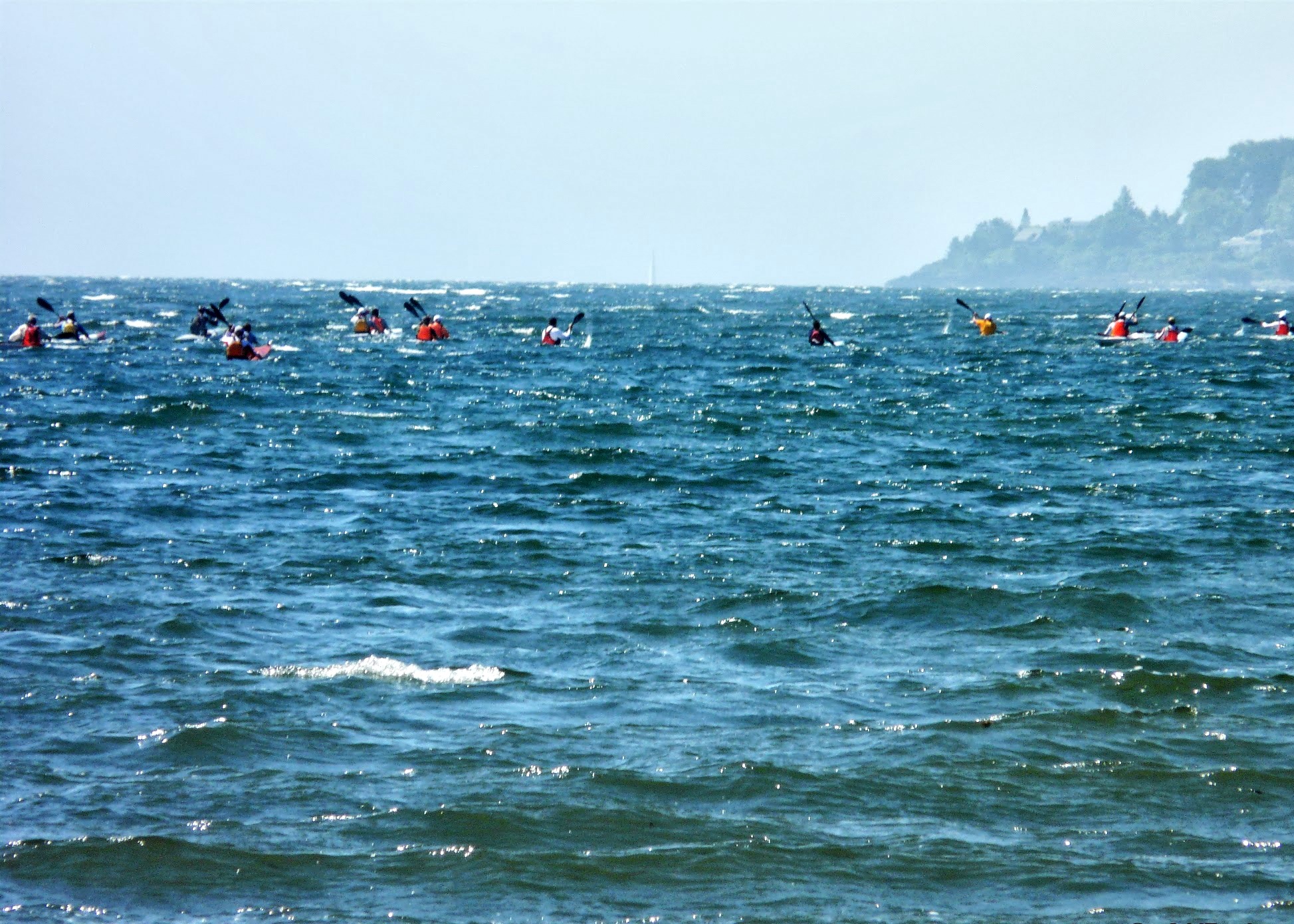
The first thing you notice at an unfamiliar venue is the water: how it flows, how the wind sets up, how the waves stack, whether there’s chop on top of swell or just one or the other. You start reading conditions before you put your boat in. You start reading conditions before you even arrive. Charts, tides, currents, weather patterns, average completion times over years, DNF rates, and more, when the data is available, of course. Building venue knowledge is as much an art as it is a science, and everyone has their own approach.
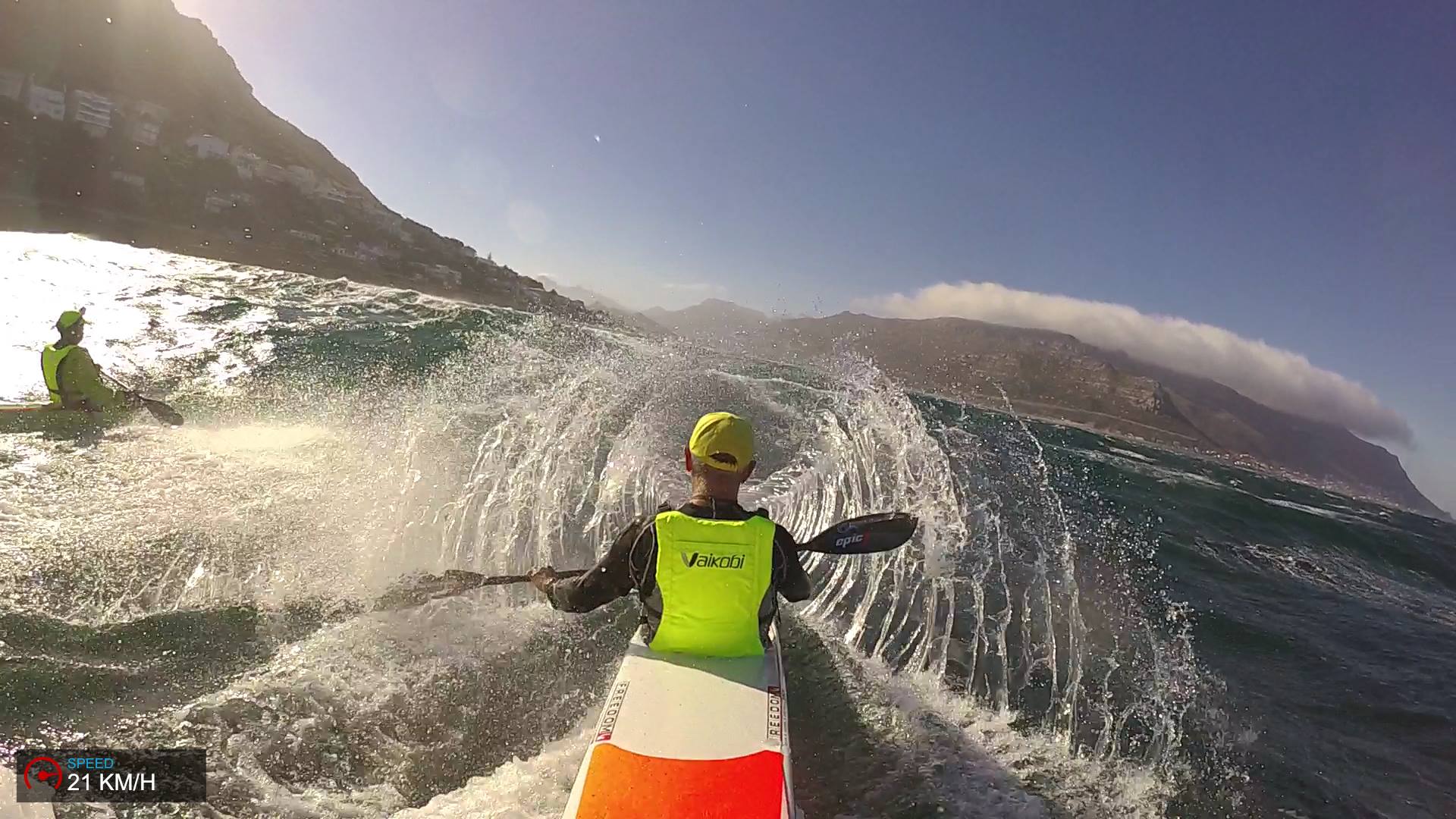
Different water asks different things. Long-period Pacific swell rewards a different kind of skillset than short-period Atlantic chop. Flatwater technical racing rewards different capabilities than a downwind run. Framed in the context of National Championships, each of these surfaces and rewards different athletic endeavors the field.
For paddlers who train in the region where a particular National Championships competition is held, there is a natural advantage: familiarity with the water, with the conditions, with how to read the course before traversing it. That advantage is real. This means the composition of the front of the pack shifts with the venue. Paddlers who are dangerous in one type of water are not automatically dangerous in another. A Nationals held in Southern California conditions will produce results that look different from a Nationals held in the Carolinas or the Gulf Coast. The field might the same people from year to year, however the finish order likely won’t be.
This is the reason the Nationals venue moves every year. Different geography, different exposure, different bottom topography, different contexts. It’s also not held at one location because our community doesn’t exist at one location. We extend from the Pacific shore to the Atlantic coast, from the Gulf to the Great Lakes, and throughout our country’s interior on a range of water bodies. Each of these environments produces skilled paddlers.
No single set of conditions should get to be the permanent arbiter of national standing. Not when the community is so broad, and when there’s so much water to work with.