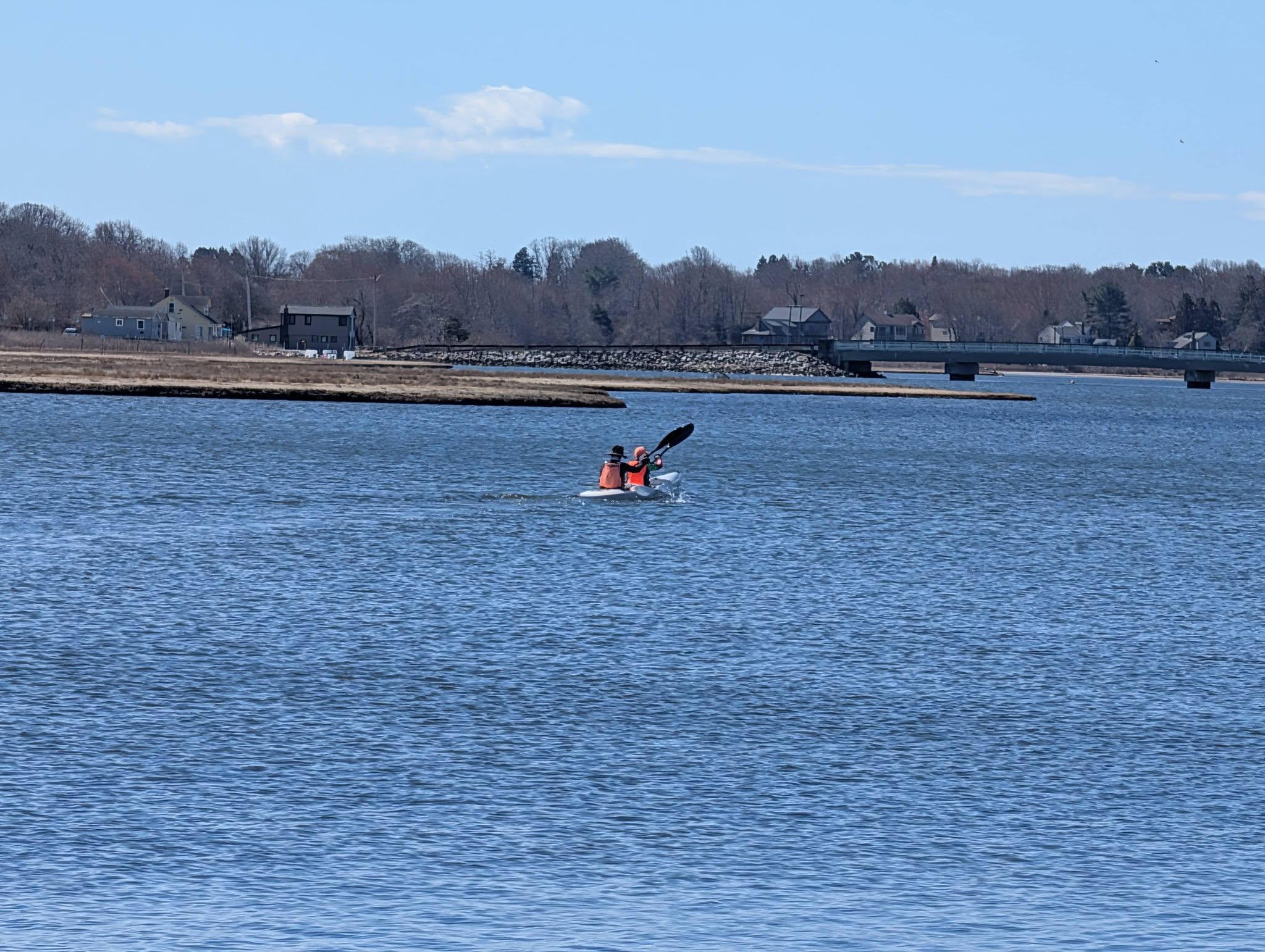
After a long cold, wet, snowy, windy winter, spring is on its way exemplified by a 60 degree temperature with sunny skis for this year’s Narrow River Race hosted by Tim Dywer. The turnout was excellent with surfskis, out riggers, rowing craft all human powered by putting a blade in the water. As I have said countless time, this race serves in part to who has done the most off season paddling or who is cross trained the most. Eight miles is a great distance since it’s a 70 minute to 90 minute work out. For most of us, 60 minutes is just about right for the 1st race of the season and 10 to 30 minutes adds some grit and determination to finish reasonably strong.
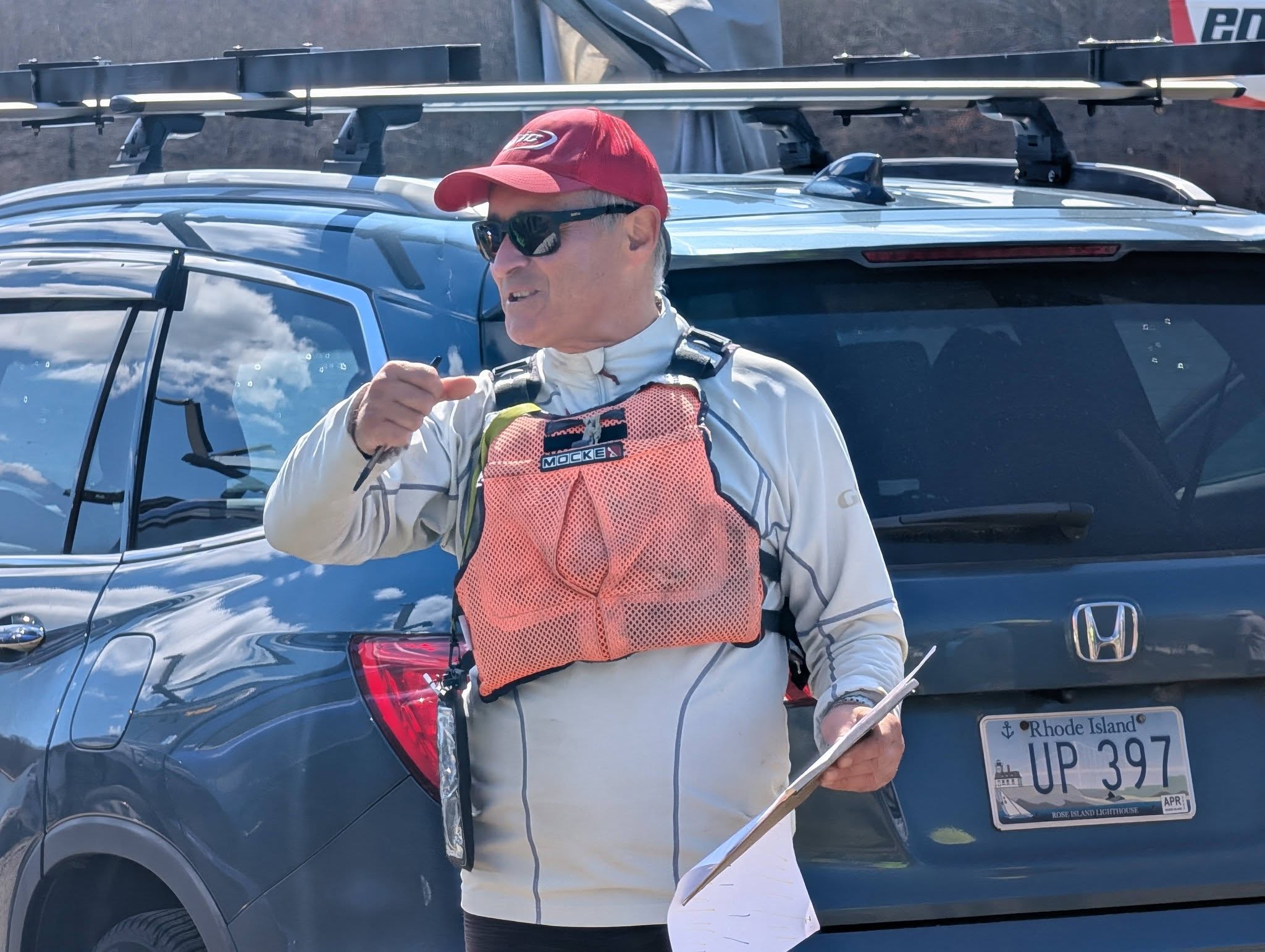
Tim Dwyer hosting
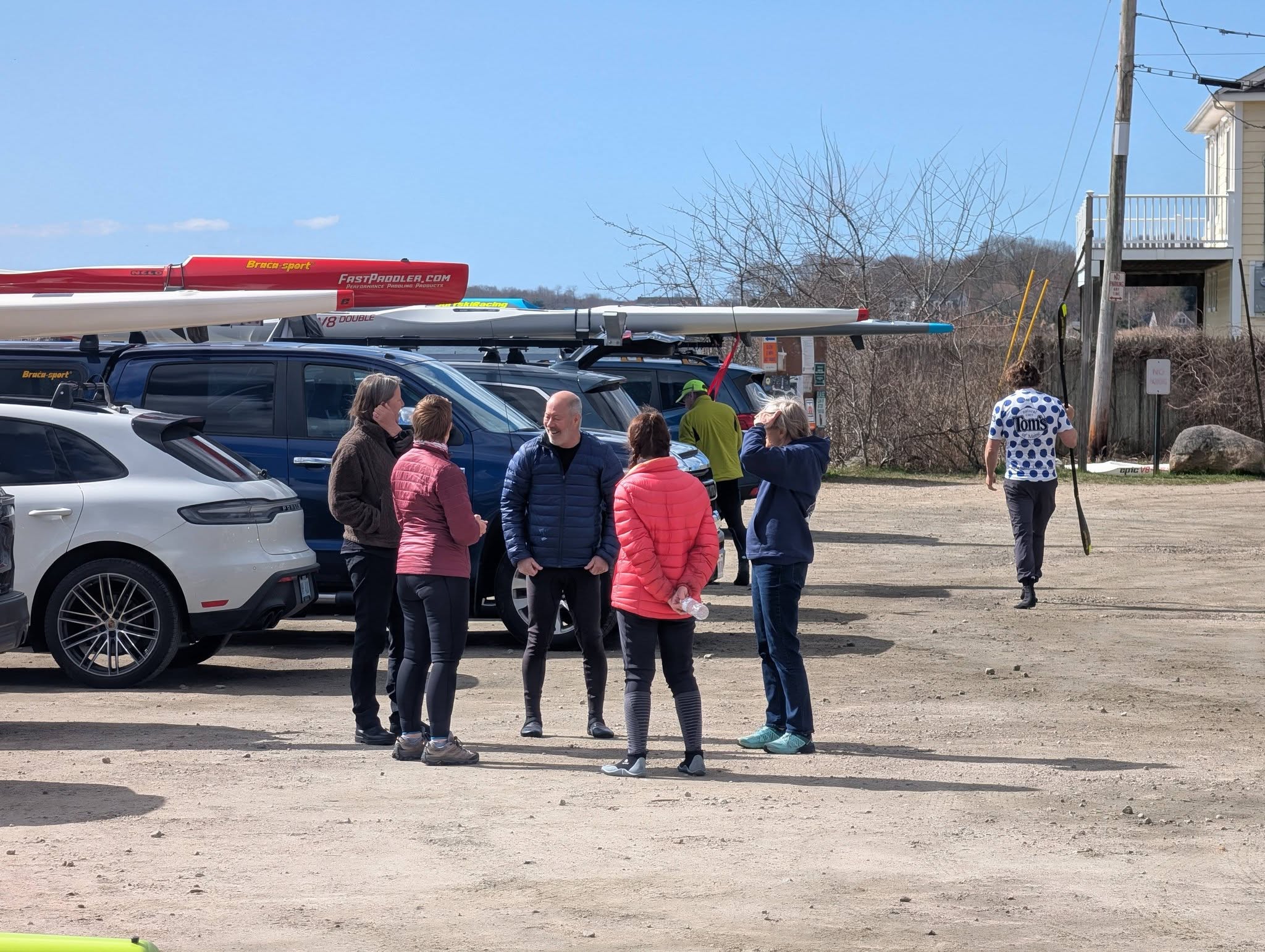
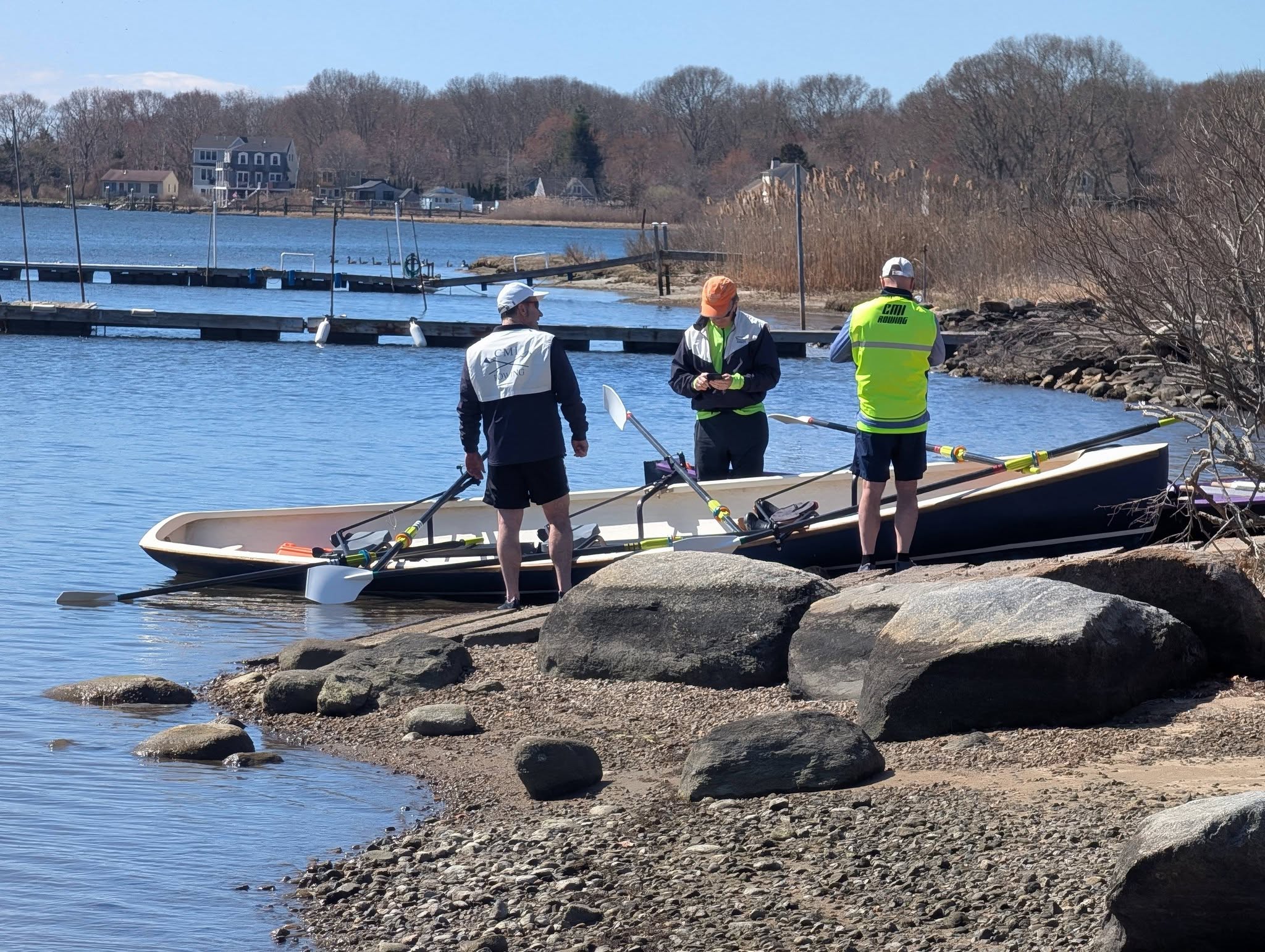
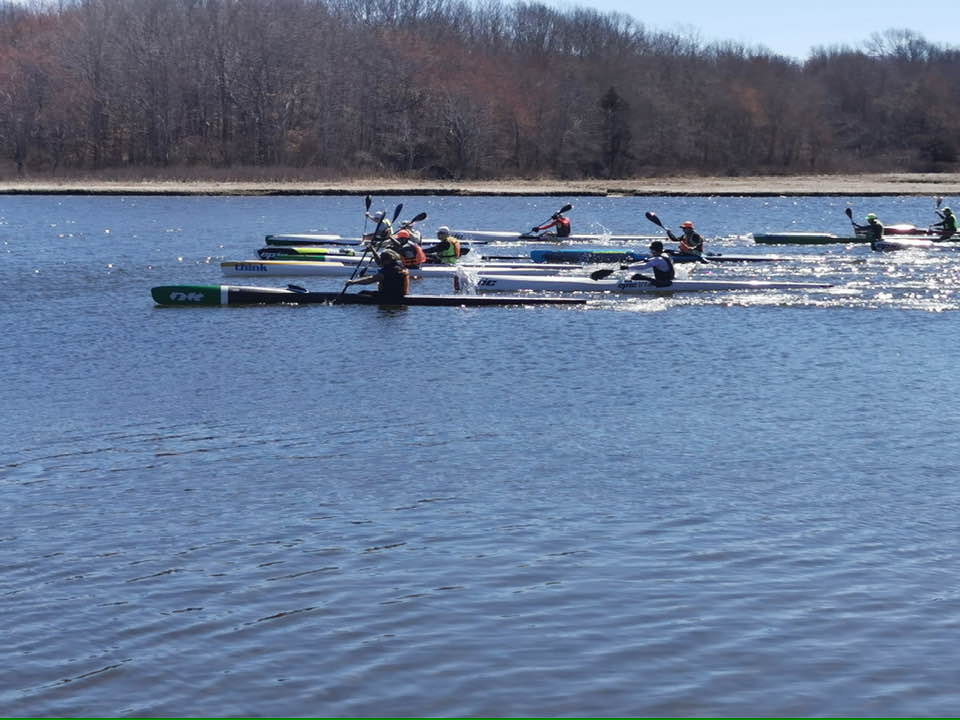
Surfski start. Photo Bob Wright
This conditions were sunny, 60 degrees, northerly winds of 15mph plus gust of 25 with the water level the lowest I have seen it. A few paddlers ran aground on the sandy, muddy bottom not knowing the the course as well as the seasoned Narrow River racers. I chose to run my 5 inch steeper rudder vice my normal 4 inch swept back rudder due to the winds. I also made sure I did not over dress too. Another change was I switched to a hydro pack to the front of my pfd vice putting one in the footwell. This encourages me to drink more with the mouth piece perfect position and the extra weight makes me lean slightly more forward for a better paddling position. Oh, I did add another watch($27.00) to my foot strap in addition to my Garmin so I would know the exact start time and read it easily vice adding TOD to one of my screens or having rotating screens on my Garmin. So for those paddlers that don’t record your time and make us guess, its easy and cheap to record your time. So with all my tweaks the only thing missing was my fitness level!
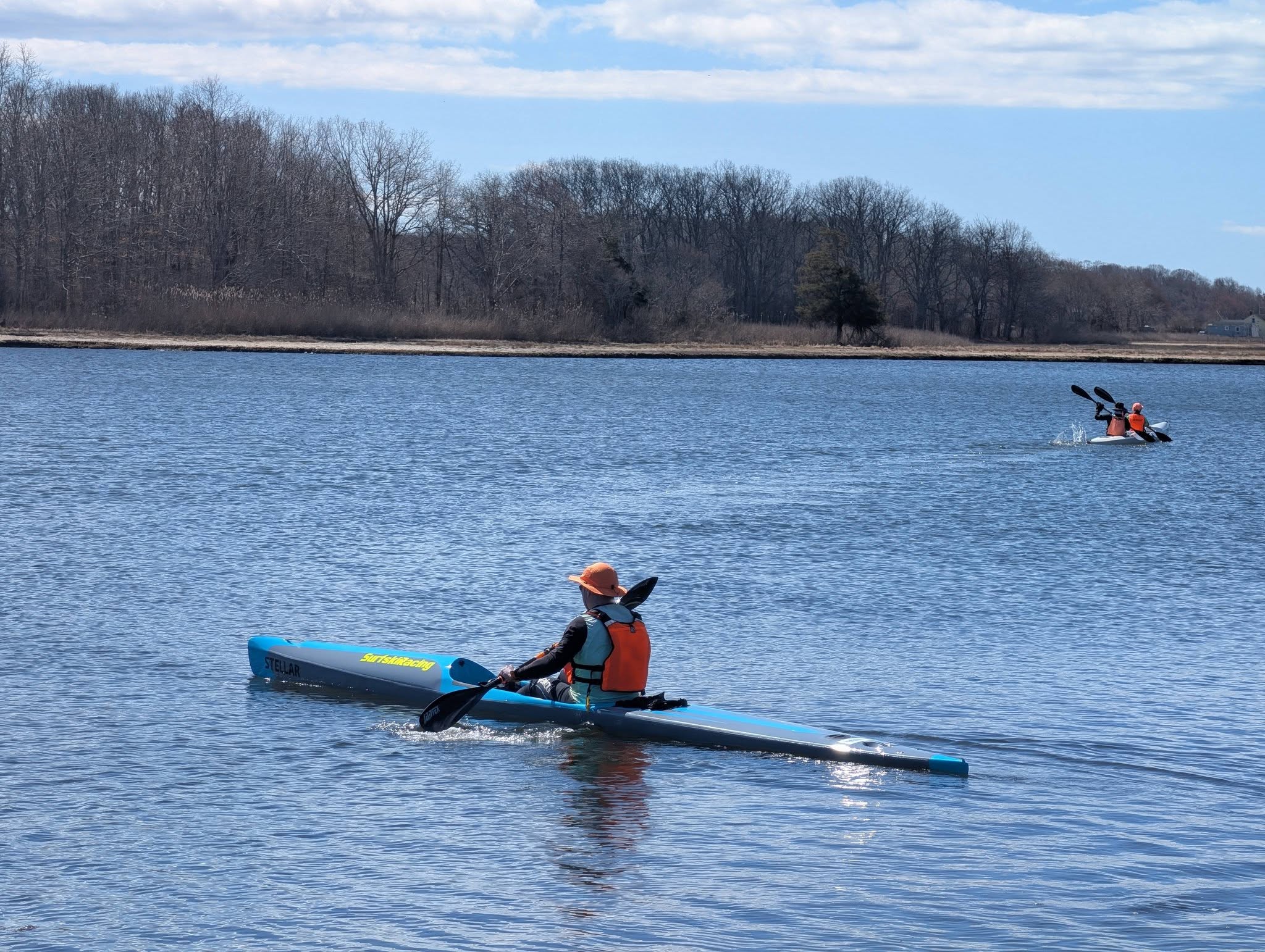
I want to thank all the paddlers that drive great distances to come be a part of the race and those include John Redos, Igor, Glenn and Richard, Joe as we as the other paddlers and rowers. Below are the results.
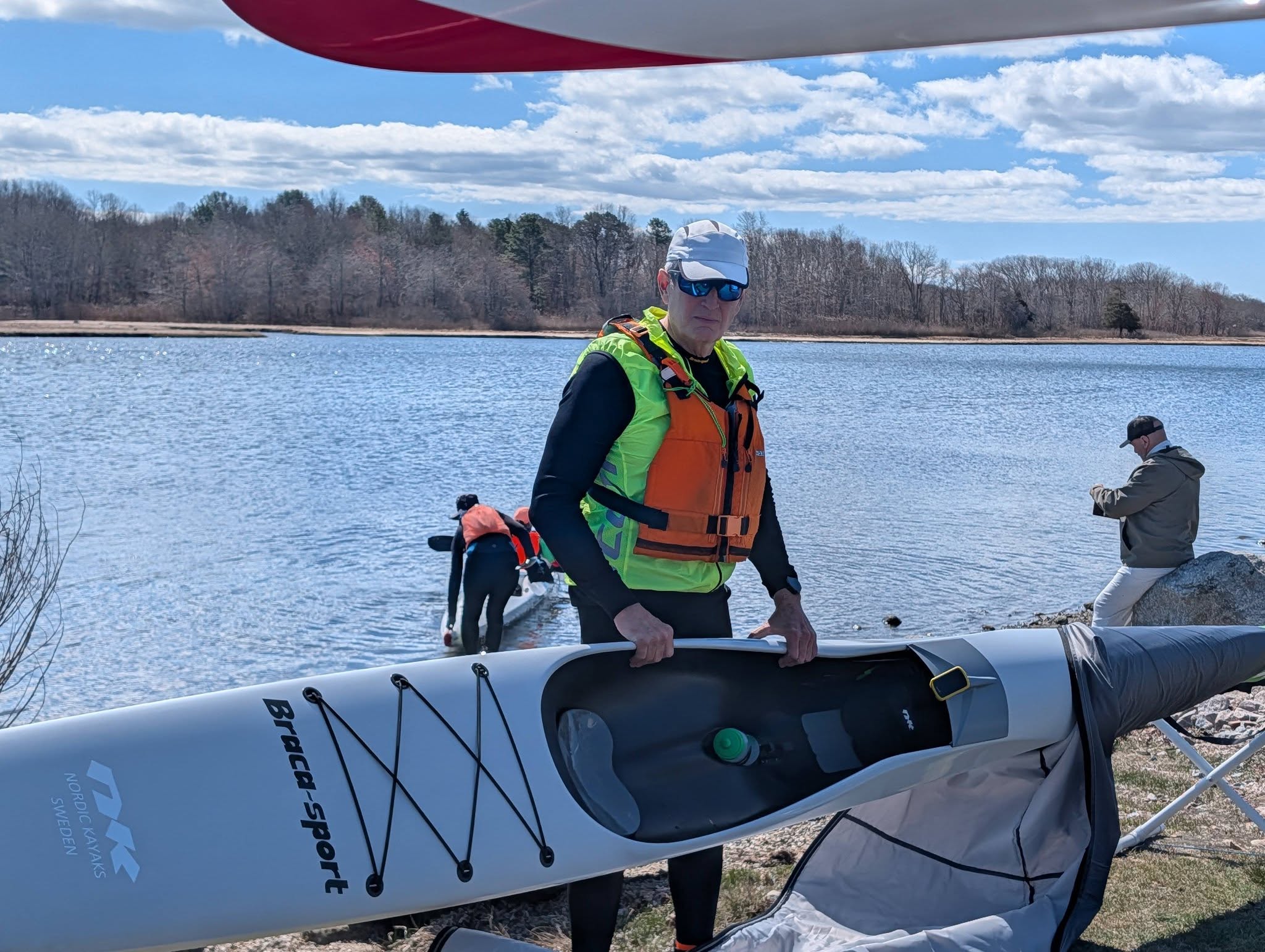
Chris Chappell
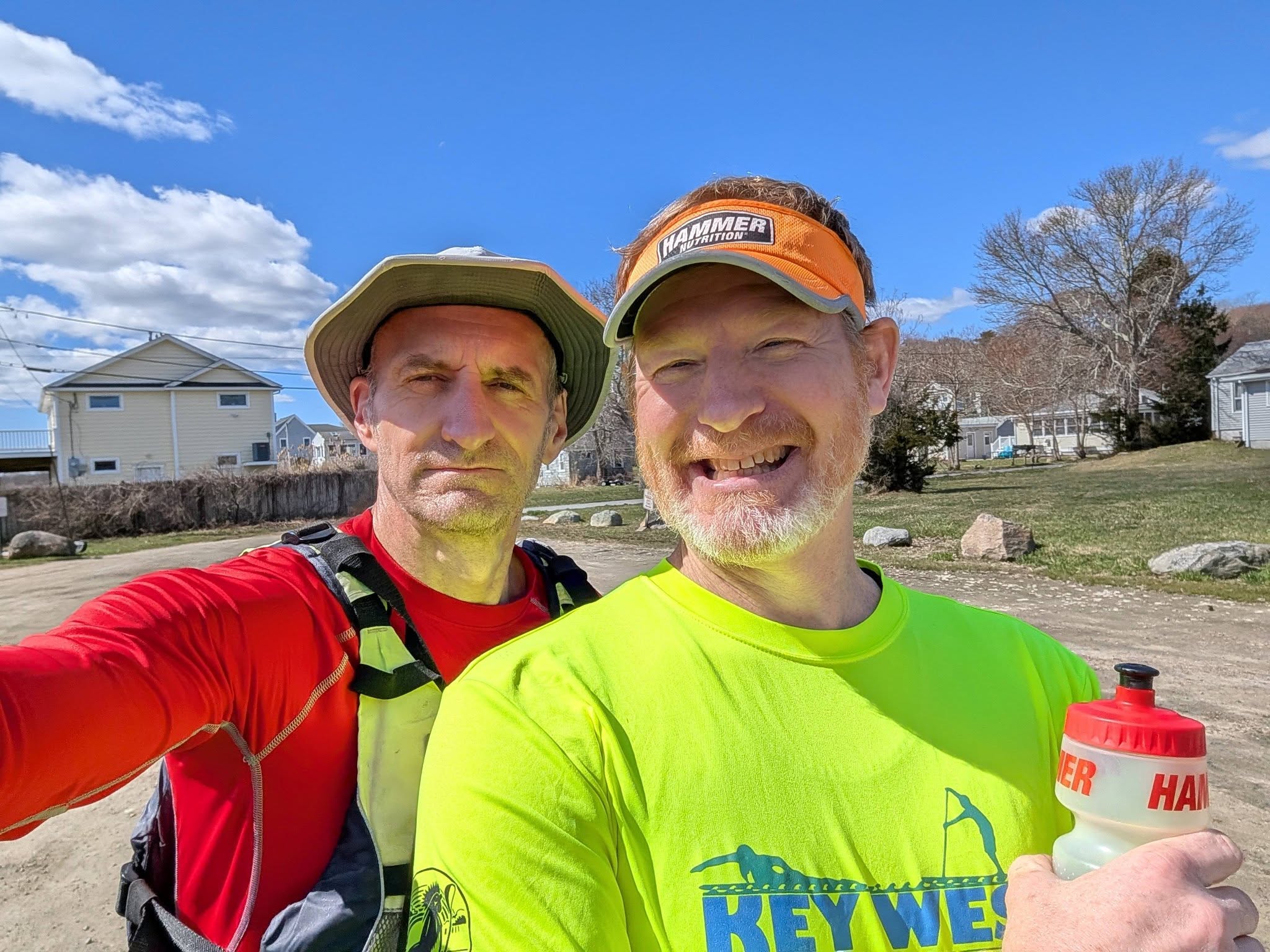
Matt and Greg
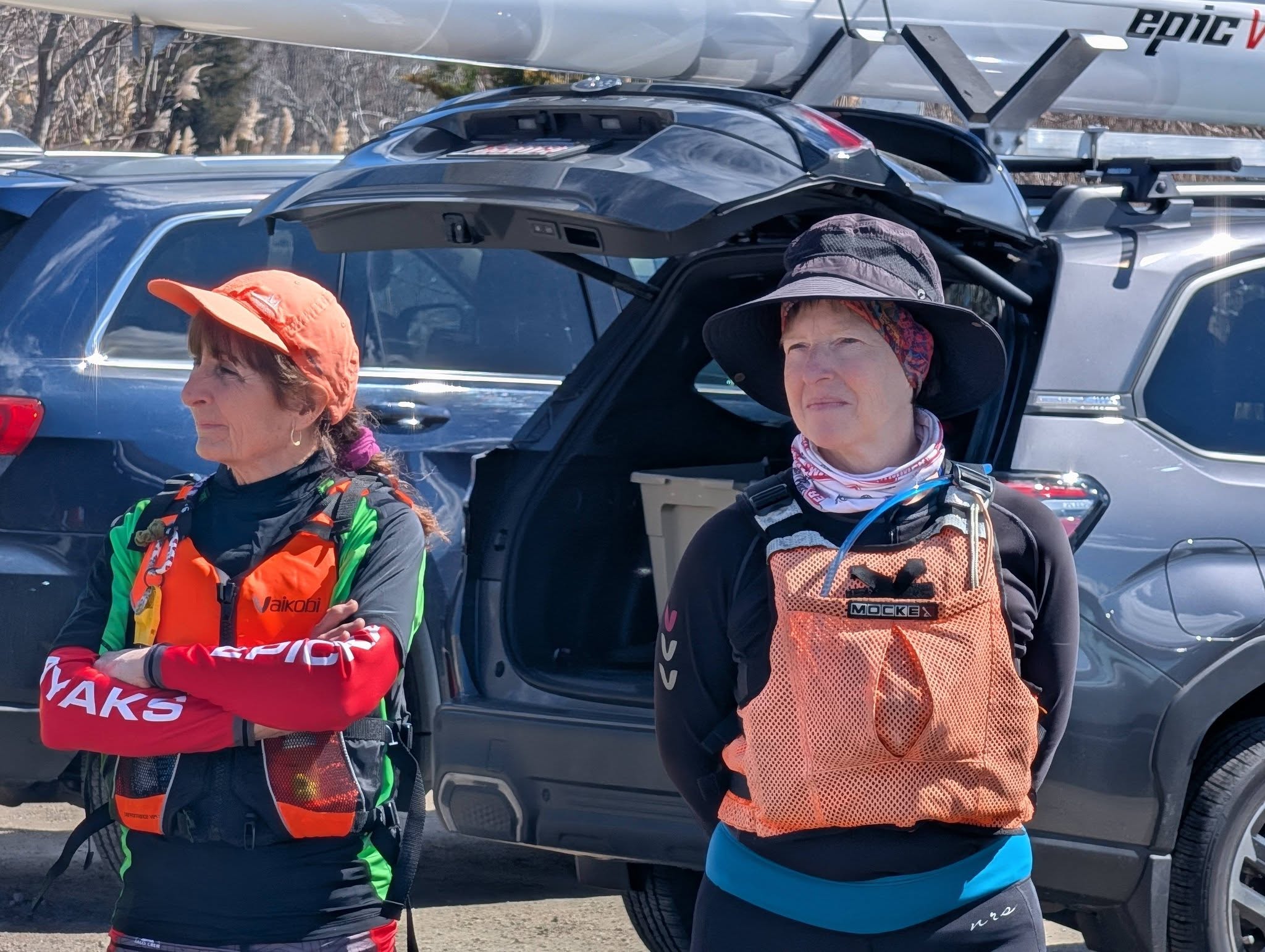
Robin and MaryBeth
https://paddleguru.com/races/NarrowRiverRace2026/results
Mike Florio took a dominant 1st, followed by Joel Pekosz 2nd, rising star Joe Guglielmetti 3rd, followed seconds later by New England favorite Greg Lesher 4th. Joel Pekosz of shorelinepaddlesports.com/ generously donated and raffled a sweet Vaikobi PFD won by Igor Yeremeev. Many photos compliments of Bob Wright.
The first 3 miles of 8 mile race was into the wind with 15 to 20mph in the lake part of the river 1 mile before the 1st turn around. Mike Florio bid his time until then and open up the gap on the return downwind section. Joel in his latest version of the Nordic Kayak Nitro 640 opened up his gap on Joe in this section too. Joe and Greg were together most of the race with Greg holding a 2 boat led until the final turn where Joe(v12 3g), closed the lead on a slow turning V14. Joe out muscled Greg by a mere few seconds.
My Race
I started off more measured this race knowing how much I had been on the water this winter. As I watched most of the field go ahead of me, I notice the 2 V8 doubles beside. Like the seasoned paddler I am, I drafted Robin and Mary Beth for most of the 1st leg on their side wash. Matt drafted them for a short time and then Chris and Patty Sherwood stuck to Robin/Mary Beth like glue inches from their stern most of the race. On the downwind section I got off their wash by staying more in the middle doing 6.3 mph. As they angled over I wanted to see how much faster I would be which turned out I did 6.6 mph for a short time before we headed back into the narrowest part of the river where I stayed off/on their side wash until the 6 mile marker where I opened up a small lead. On the return to the bridge, I got back on Chris/Patty wash then I pushed the final half mile catching Chris Chappel (Nitro Storm 610)whose back had tightened up early in the race). Chris picked up the pace and I jumped on his wash for about a minute to open up the gap more on Chris/Patty. I enjoyed my race and felt good the whole race while maintaining 139 heart rate the best this season paddling or cycling. The course was slower today with low water and a steady head wind for half of the race compared to April 2025. So today, I came away feeling excited about the upcoming season.
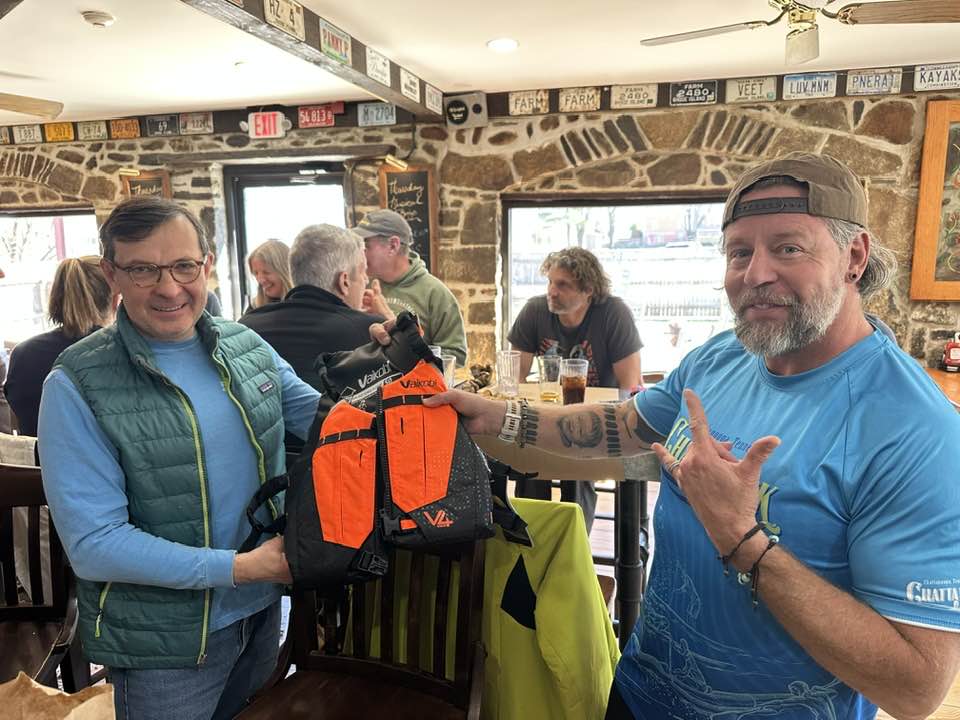
Joel of Shoreline Paddle Sports graciously presented the raffle winner of the Vaikobi Pfd to Igor. I demo Joel’s Nitro after the race and really liked it! Looking forward to demoing a few more at the ROTC in a few weeks.
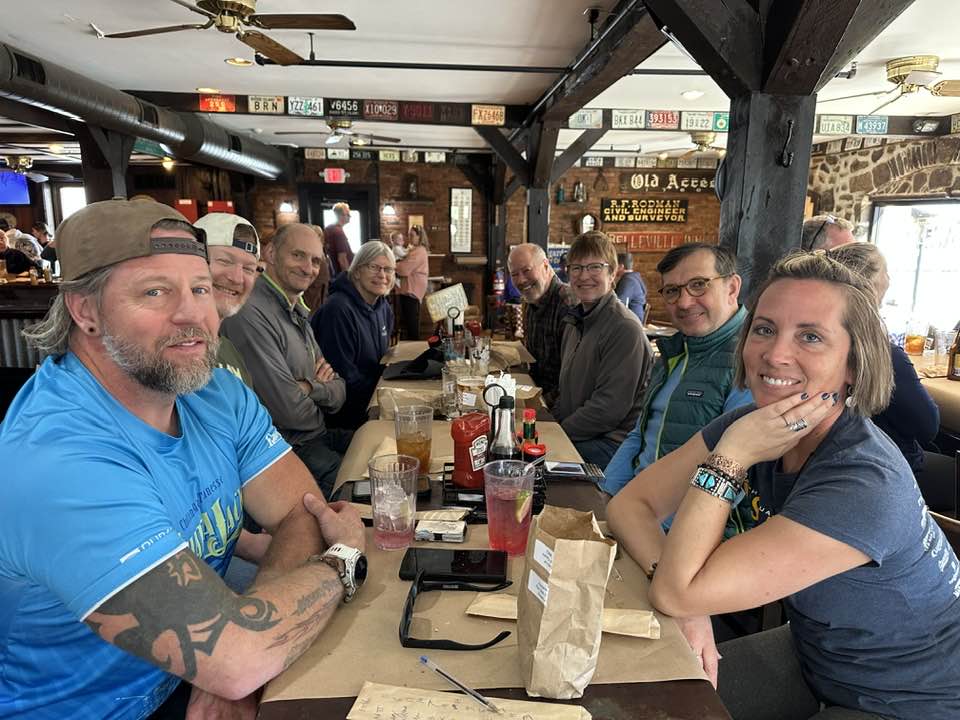
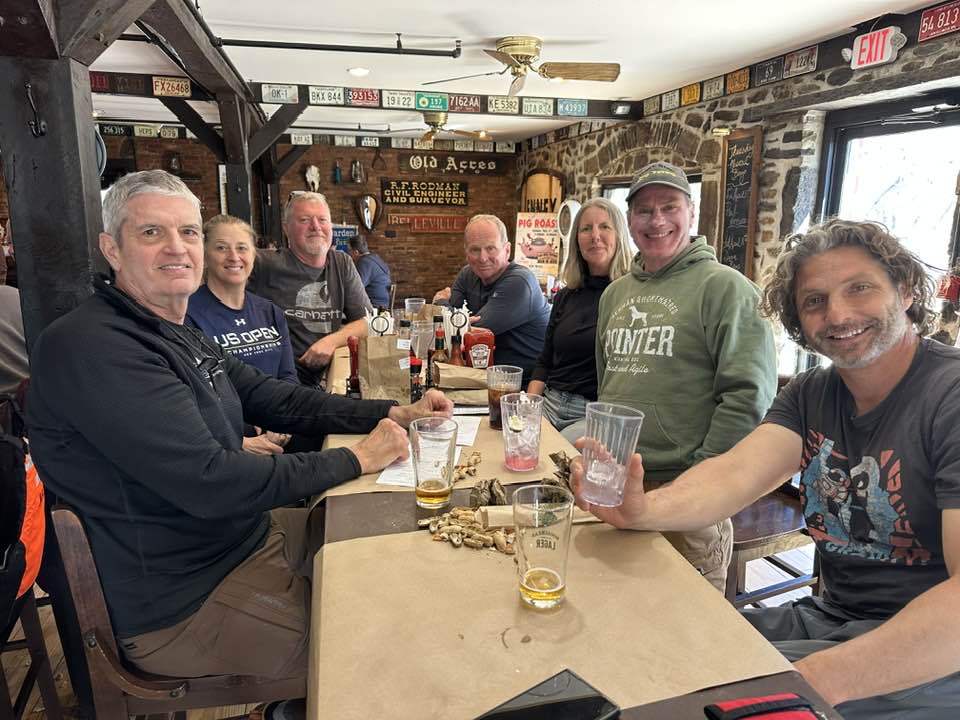
Lunch afterwards
On a side note, Matt Drayer, Editor in Chief of this site wrote a excellent article on the “Ethics of drafting” which I copied and pasted. Ethics of Drafting
I share Matt’s opinion. Drafting within class is “racing” if you choose. Drafting out of class is subjective. During flat water races, my own view is I draft out of class, K2, C2, etc. I think most paddlers that I race with do this. In the local flat water races, its often a mass start or delayed start so many times you are right beside or behind boats of other classes. During ocean races including my own Sakonnet River Race, I DQ myself willingly after drafting off Chris/Patty for the upwind section of this race a few years ago. I was so out of shape, but I wanted to have company and make it easy on myself so I chose to draft knowing I would DQ myself. At the bigger ocean races, you can’t draft out of class so I avoid drafting other classes.
Even drafting within class can be irritating. Many years ago at the 12 mile Mystic River Race, Joe Shaw drafted me(surfski) the entire race in his K1 where he out sprinted me in the last quarter mile. I encouraged Joe to take a pull during the race but he declined without saying a word. Joe was a racer who I am friends with, who never took a pull. As you race more, you know who will share, who would like to share the pull but are at their limit sitting on your wash and can’t, and those who use it tactically to gain an advantage mentally or physically. I personally am a sharer while racing provided I can,with other paddlers that reciprocate. Locally we know most of the racers and are friends and competitors.
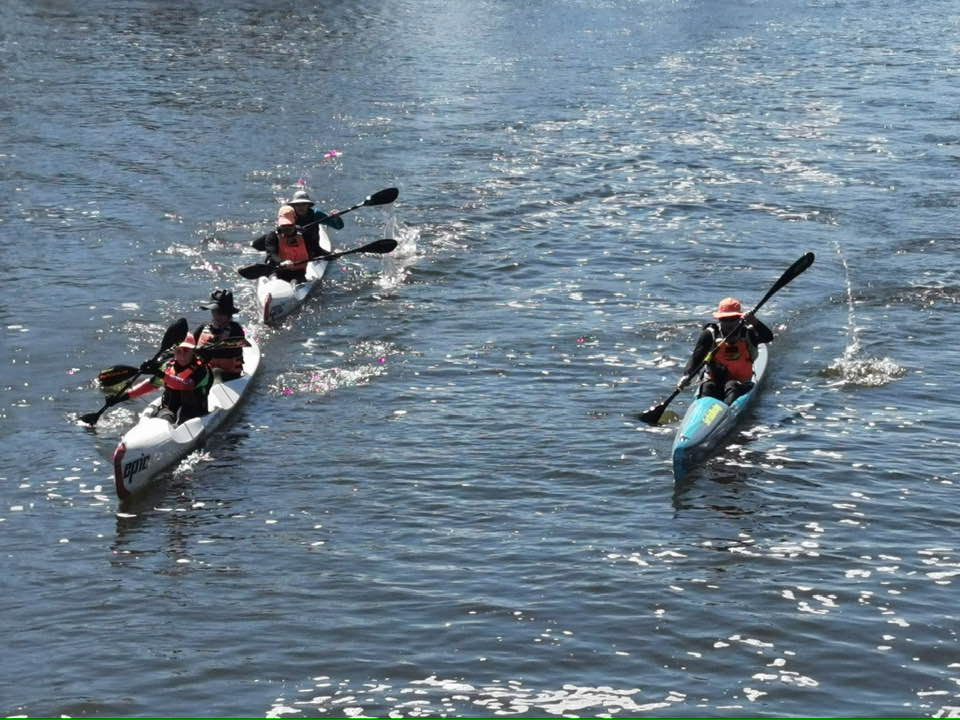
Robin/MaryBeth while Patty/Chris draft them. I separated from drafting to go under one of the bridges before hopping back on.
The other point of contention while flat water racing is to yield or not during the race on buoy turns. Most C2’s will not yield to surfskis even if the surfski paddler is slightly ahead or even. Do they have a different mindset while racing than we do? Many will run you over and will not give an inch. I remember at a race on the CT river years ago, and a C2 was yelling at me even though I was a half length ahead of him to yield. I did not yield since I was clearly ahead and dropped him within the next half mile. He just wanted a clear path. This problem can be avoided by staged start times, letting the skis go first since the fastest surfski paddlers and many mid pack racers are faster than the C2’s, so the problem is avoided but maybe not the mindset of the C2 racers.
On Racing: Drafting Ethics
Drafting is one of the defining features of surfski racing, and also one of the least openly discussed. Everyone does it. Few talk about where the lines are. The result is a quiet tension between what is allowed, what is smart, and what feels right on the water.
From a rules perspective, drafting is generally legal. From a racing perspective, it is often essential. From a social perspective, it carries weight. Paddlers remember who races cleanly, who uses others well, and who crosses into behavior that feels extractive rather than competitive. Reputation, while unofficial, travels faster than most results.
The gray areas usually appear in mixed-category fields. Drafting between paddlers of different ages, genders, or boat classes can change outcomes in ways that feel misaligned with the spirit of competition, even when technically permitted. Experienced racers develop their own internal standards here. Some disengage deliberately. Others accept the dynamic but avoid dependence. The key is awareness rather than ignorance.
Another ethical fault line is effort imbalance. Sitting on a draft without contributing, especially over long sections, creates resentment and often destabilizes packs. Strong groups tend to self-regulate—surges appear, lines change, and passive riders are quietly encouraged to work or fall off. These dynamics are rarely spoken, but they are well understood.
Good drafting is not parasitic. It is cooperative without being collusive. It preserves momentum, shares burden when appropriate, and respects that everyone is racing their own race. Paddlers who manage this well tend to be welcomed in packs rather than tolerated.
Ultimately, drafting ethics are about long-term thinking. One race rarely defines a season, but patterns do. How you race shapes how others race with you. The paddler who is trusted gains options. The paddler who is not finds doors closing at the worst possible moments.
Races, of course, do not all unfold the same way. The ethical and tactical choices that make sense in one field may fail completely in another. Understanding that variability—and adjusting accordingly—is the focus of the next article.
Next race: ROTC, April 27th, Boston. Wesley Echols