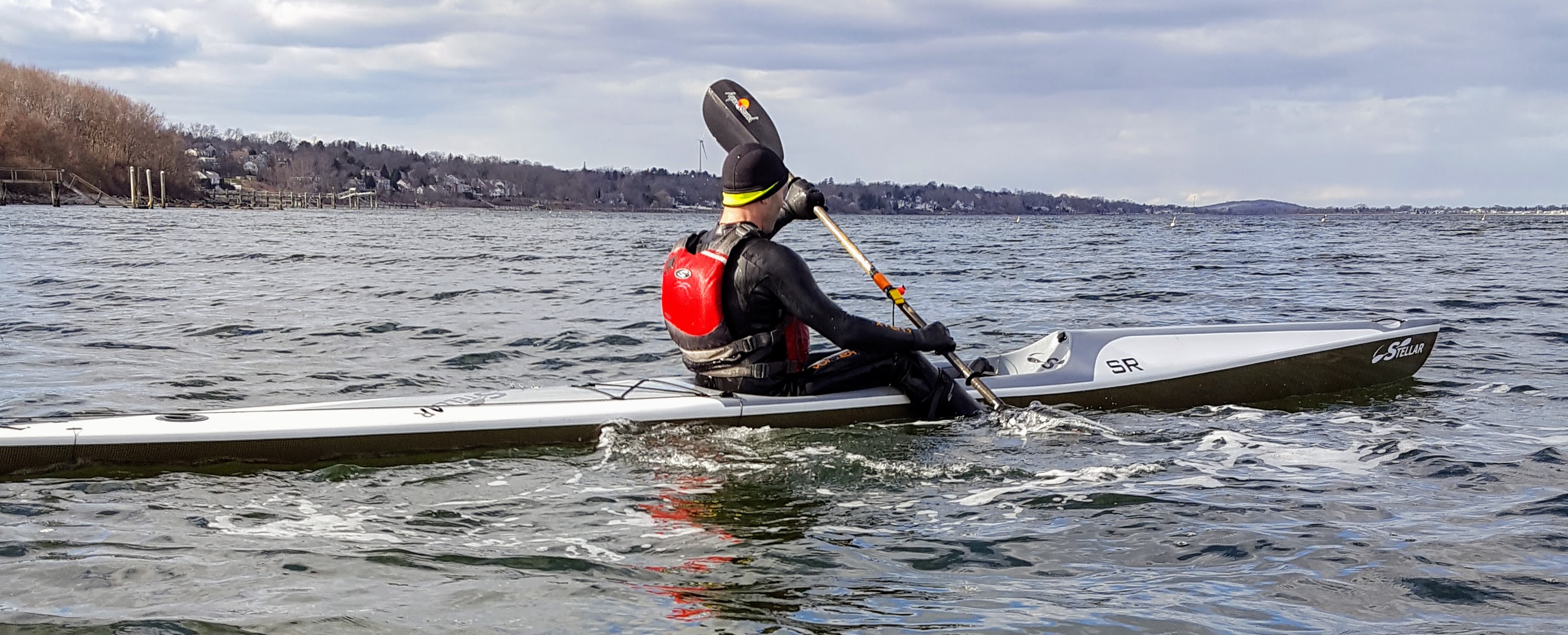
Downwind paddling is often described as a balance problem, but it is more accurately a connection problem. Staying upright matters, but staying connected to what the boat is doing matters more. That connection is built through contact points, especially the feet and legs, which quietly transmit information long before it reaches conscious thought.
In calm water, connection can feel optional. The boat moves predictably, and small inefficiencies go unnoticed. In moving water, however, disconnection shows up immediately. The hull accelerates unevenly, the stern shifts, and the paddler feels late rather than early. When that happens, effort increases while control decreases, not because the paddler lacks strength, but because feedback is arriving too slowly or not at all.
The footboard plays a central role in this feedback loop. It is not just a platform for pushing, but a surface through which the boat communicates. Subtle changes in pressure, angle, and timing tell you when the hull is climbing, sliding, or about to release. When that signal is muted or inconsistent, decision-making becomes reactive. The paddler is always correcting what has already happened.
Leg engagement in downwind conditions is often misunderstood. It is not about driving power into the stroke, but about maintaining a constant, elastic connection to the hull. The legs act as sensors as much as levers. When that connection is relaxed but present, the boat’s movements feel legible. When it is tense or absent, the hull feels unpredictable, even if the conditions have not changed.
Spring conditions are an ideal time to pay attention to this relationship. Energy is uneven, and mistakes are more instructive than they are costly. Small lapses in connection lead to delayed steering, missed links, or overcorrections that interrupt glide. None of these failures are dramatic, but they compound over the course of a run. Recognizing them early allows adjustments before habits harden.
Staying connected does not mean being rigid. In fact, excessive tension often breaks the feedback loop by drowning out subtle signals. The goal is continuity, not force. When the feet, legs, and hull move as part of the same system, the boat becomes easier to read, even as conditions grow more complex.
As the series moves toward execution and lines, this idea of connection will resurface repeatedly. Steering, linking, and energy management all depend on timely feedback. For now, the takeaway is simple. Downwind paddling rewards those who feel what the boat is doing before they try to control it.