Most paddlers arrive on race day with a reasonably-informed view of the conditions. They’ve checked forecasts, studied wind direction, and looked at tide charts. All of that is useful—until the horn sounds. Once the race begins, conditions stop being information and start being experience. What matters then is not what was predicted, but what is actually happening around you.
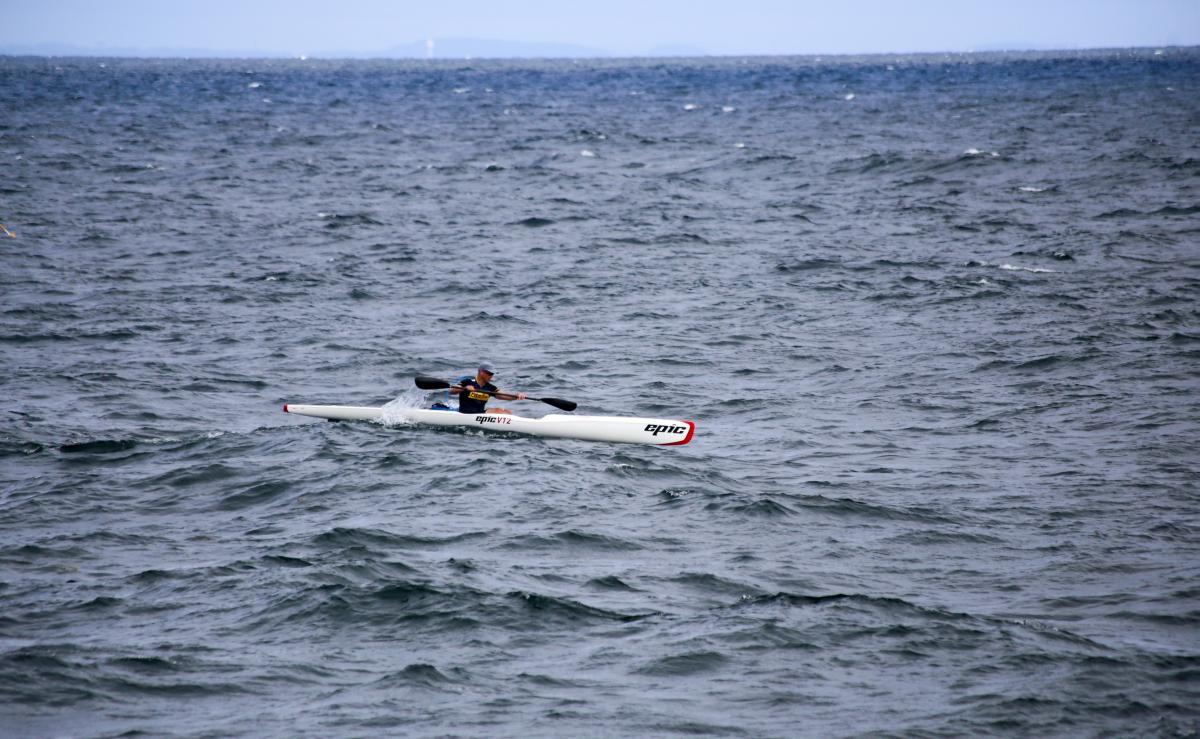
Under pressure, perception narrows. Effort rises, breathing shortens, and attention collapses inward. This is why many paddlers miss obvious changes on the water: a subtle wind shift, a new pattern of texture, a line of darker water indicating current. The paddlers who continue to read conditions mid-race are not more observant by nature; they are simply disciplined about lifting their gaze when it would be easier not to.
Reading conditions during a race is not about analysis. There is no time for it. It is about noticing discrepancies—between expectation and reality, between one side of the course and the other, between how hard you are working and how fast you are moving. These discrepancies are signals. Ignoring them locks you into decisions that no longer make sense.
Pressure also distorts confidence. When fatigued, paddlers tend to overvalue familiar lines and undervalue emerging opportunities. They stick with what worked earlier even as conditions evolve. Experienced racers remain flexible. They allow themselves to revise assumptions without interpreting that change as failure or indecision.
This skill compounds quietly. The paddler who reads conditions well does not need dramatic moves. Small adjustments accumulate: a slightly different angle into the wind, a cleaner section of water, a smoother connection between waves. None of these feel decisive in isolation, yet together they shape the race.
Condition awareness is not separate from racecraft; it is woven through all of it. Starts, packs, pacing, and risk all depend on seeing the race as it is now, not as it was expected to be. The next article narrows that focus further, looking at one of the most commonly misunderstood elements in ocean racing: why wind direction often matters more than wind strength.