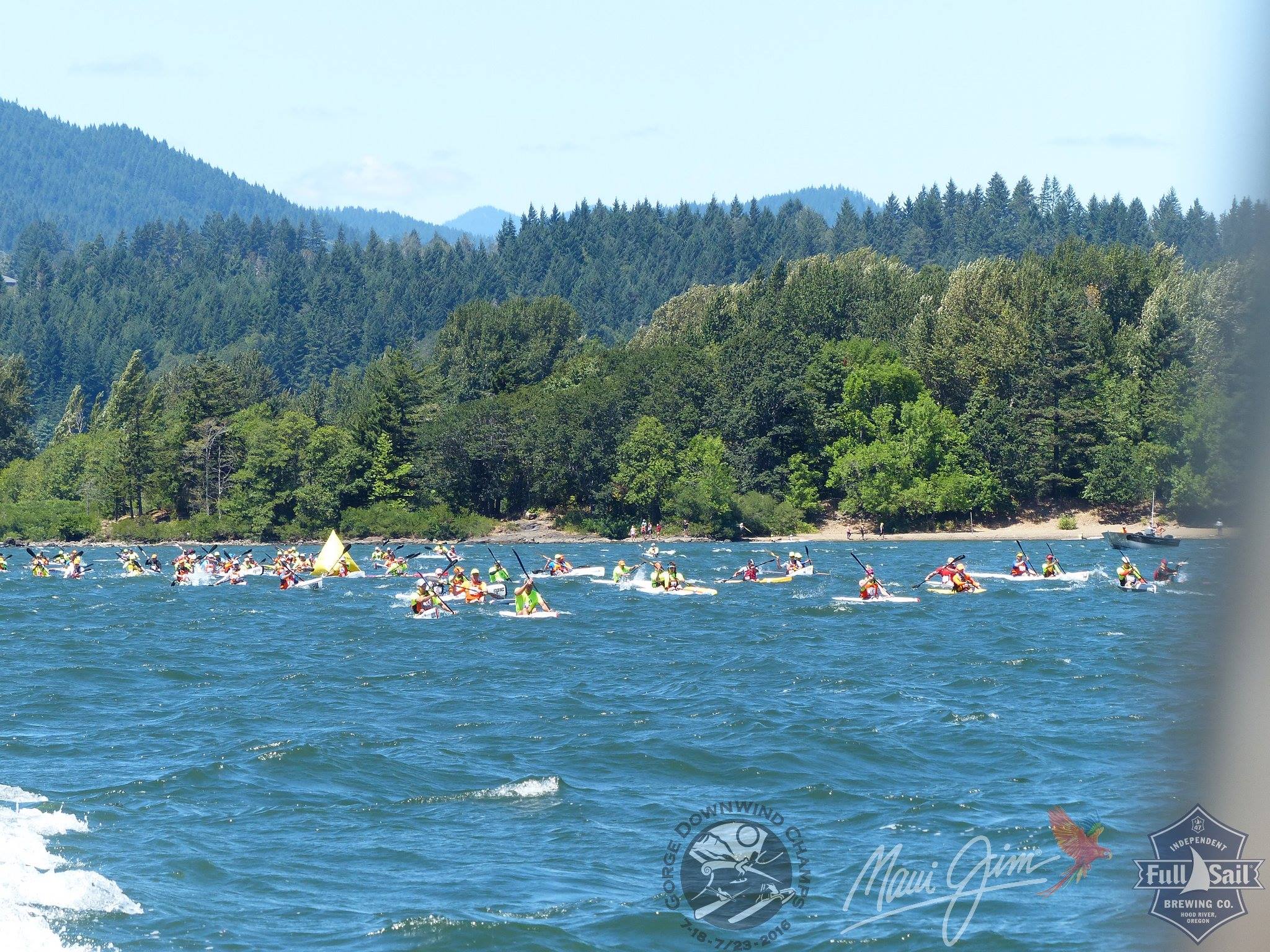
No two races present the same problem. Course length and conditions matter, but the character of the field often matters more. Strategy that works perfectly in one race can fail completely in another, not because the paddler raced poorly, but because the context changed.
Large fields create compression. Starts are chaotic, packs form quickly, and small decisions are amplified by proximity. In these races, patience and spatial awareness often matter more than early speed. The ability to stay composed while the race sorts itself out is a competitive advantage. Overreacting early usually leads to wasted effort and limited options later.
Small fields behave differently. Gaps open sooner. Drafting opportunities are fewer. Tactical decisions carry immediate consequences. In these races, hesitation can be costly, because missed moves may not present themselves again. Racing alone becomes more likely, and self-reliance matters more than pack management.
Mixed-ability fields introduce another layer of complexity. Stronger paddlers may find themselves towing others. Developing racers may be pulled beyond sustainable effort. Managing these dynamics requires honesty about goals. Racing for position, racing for rankings, and racing for experience are not the same thing, and confusion between them often leads to frustration.
Elite fields tend to be quieter. Moves are smaller. Errors are punished quickly. In these races, the absence of chaos is deceptive. Nothing feels decisive until it suddenly is. Paddlers who arrive expecting drama often miss the subtle shifts that determine outcome.
Good racecraft adapts. It recognizes the field for what it is, not what the paddler wishes it to be. Those who adjust expectations early race with more clarity and fewer regrets.
All of this—the starts, the packs, the pacing, the risk—ultimately funnels into one final phase. No matter how well a race has been managed, it must still be closed. The last article looks at that moment, when fatigue is high, options are few, and execution matters most.