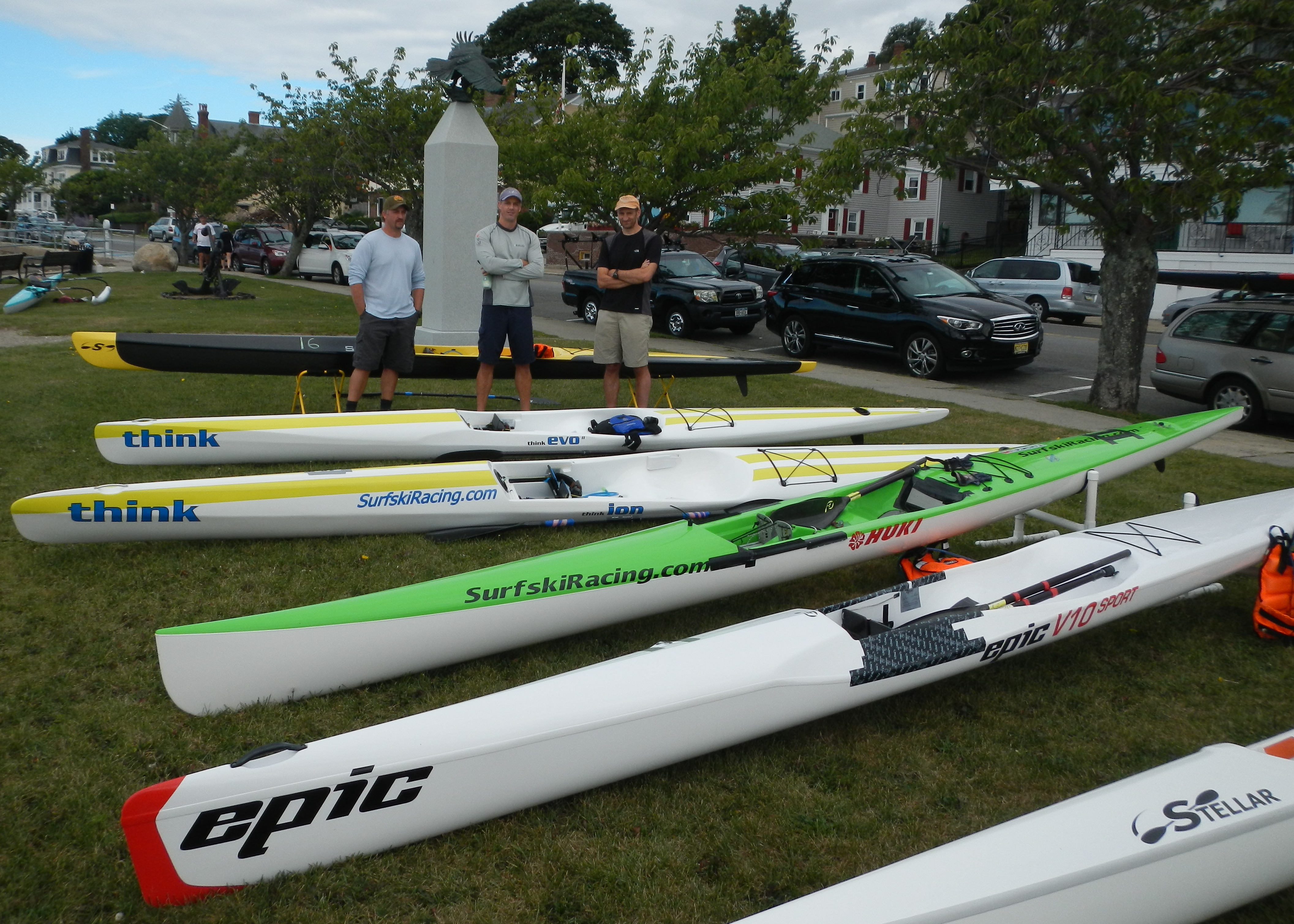
Boat choice is often discussed as a matter of identity. Paddlers describe themselves as being “in” a certain ski, or moving “up” to another, as if progression were linear and permanent. Downwind conditions tend to dismantle that idea quickly. The boat that feels perfect one day can feel demanding or even uncooperative the next, not because the paddler has changed, but because the context has.
Downwinding exposes how closely a hull is tied to its environment. Length, volume, rocker, and stability all influence how a boat interacts with moving water, but none of those qualities are inherently good or bad. They simply respond differently to wind speed, wave spacing, and surface texture. A longer, narrower hull may reward clean energy and open faces, while feeling sticky or unforgiving when the energy is disorganized. A shorter or more stable hull may feel slower in theory, but convert imperfect conditions into usable motion more consistently.
This is where context matters more than preference. Boat choice downwind is not about what you like, or what you race most often, but about what allows you to stay connected to the water you’re actually paddling in. Staying connected means being able to read what’s ahead, react without hesitation, and let the boat accelerate when the opportunity presents itself. If the boat demands constant correction or creates tension instead of feedback, it is mismatched to the day, regardless of its reputation.
Spring is often when this mismatch becomes most obvious. Conditions are transitional. Energy is present but uneven. Water temperatures are still low, and the margin for error is smaller. A boat that feels manageable in mid-summer may suddenly feel like work, while something slightly more forgiving allows you to relax, observe, and learn. That relaxation is not a concession. It is what makes downwind decision-making possible in the first place.
Understanding boat choice as context rather than preference removes a quiet pressure many paddlers carry. It allows different boats to serve different purposes without implying regression or advancement. More importantly, it keeps the focus where it belongs: on reading energy, choosing lines, and developing judgment. Boats are tools in that process, not statements about where you belong.
In the articles that follow, the focus will shift toward preparation and execution. Equipment will continue to appear, but always through the lens of how it changes interaction with moving water. Downwinding does not reward allegiance to a setup. It rewards attention to conditions, and the willingness to choose what fits the day.