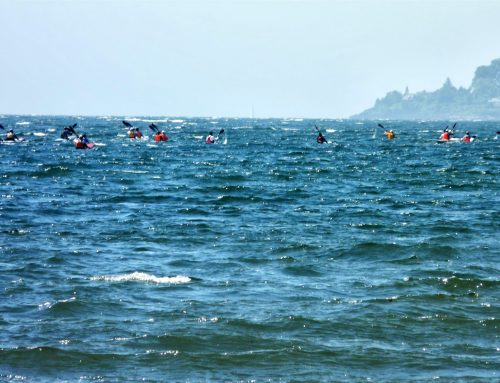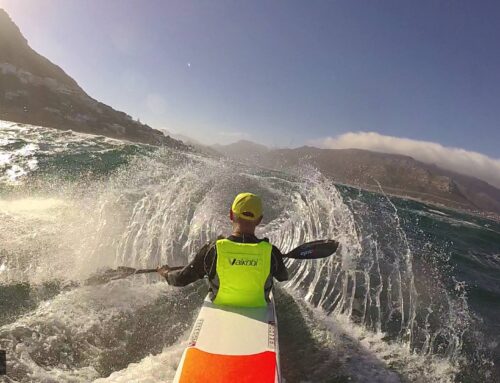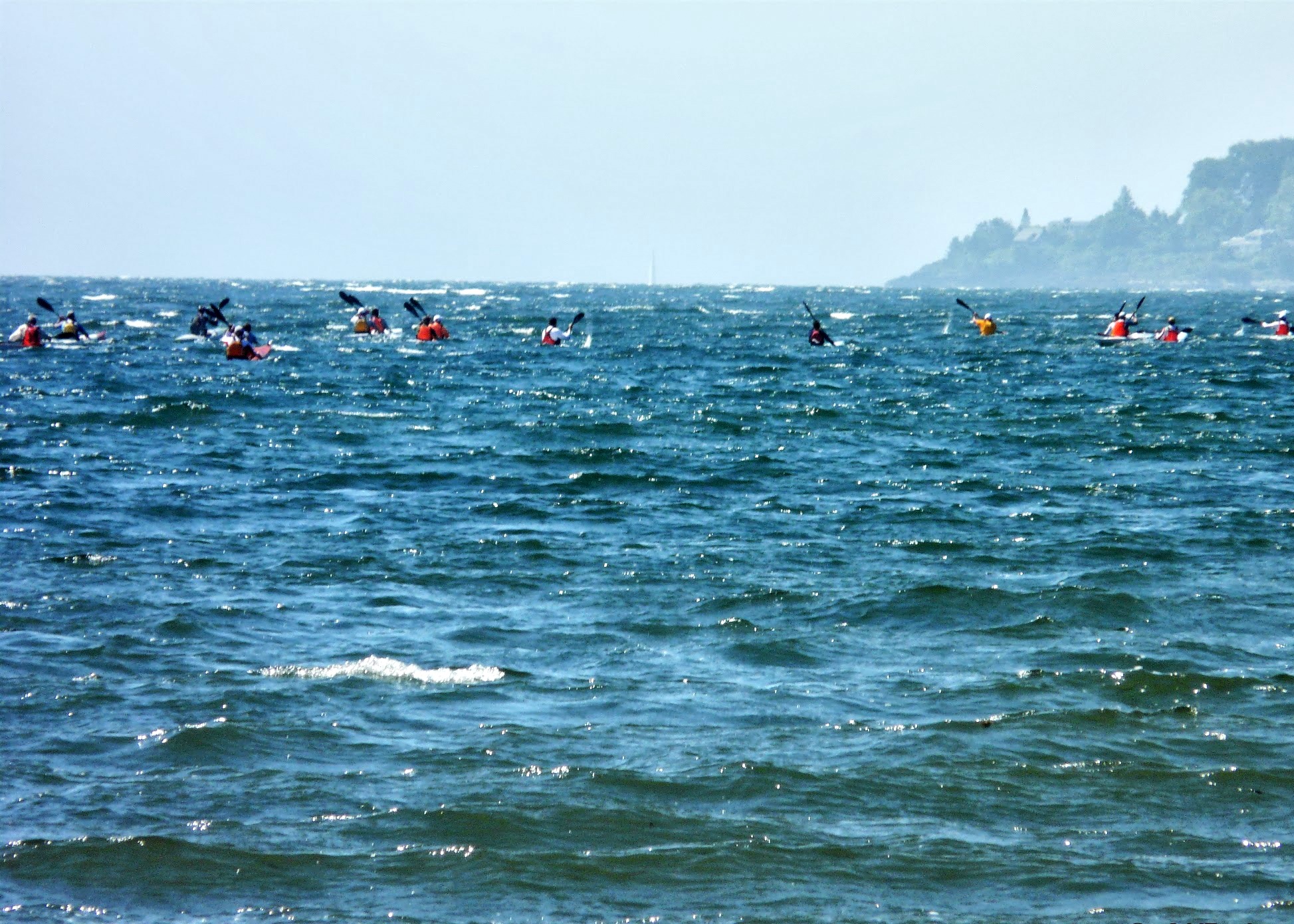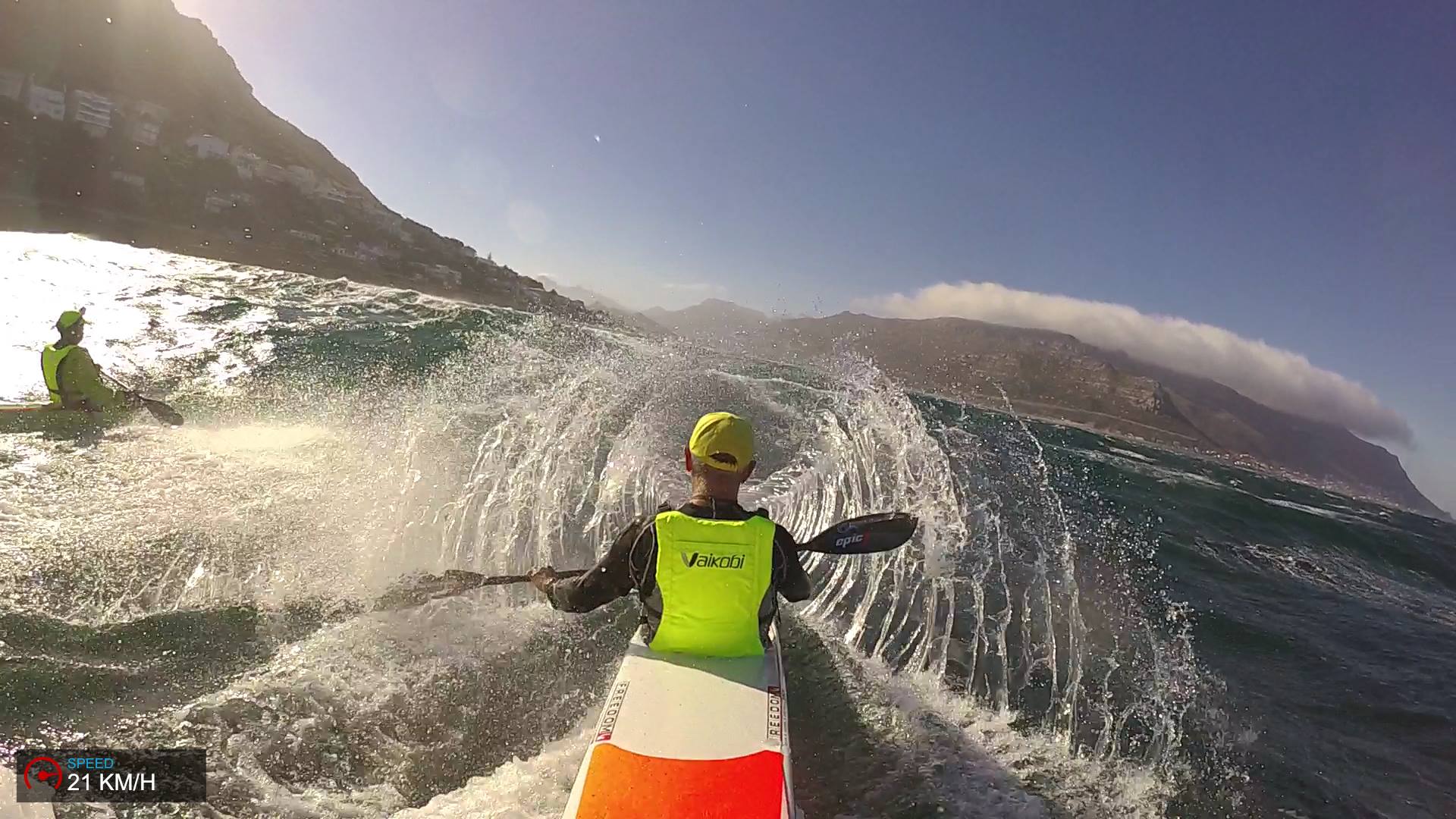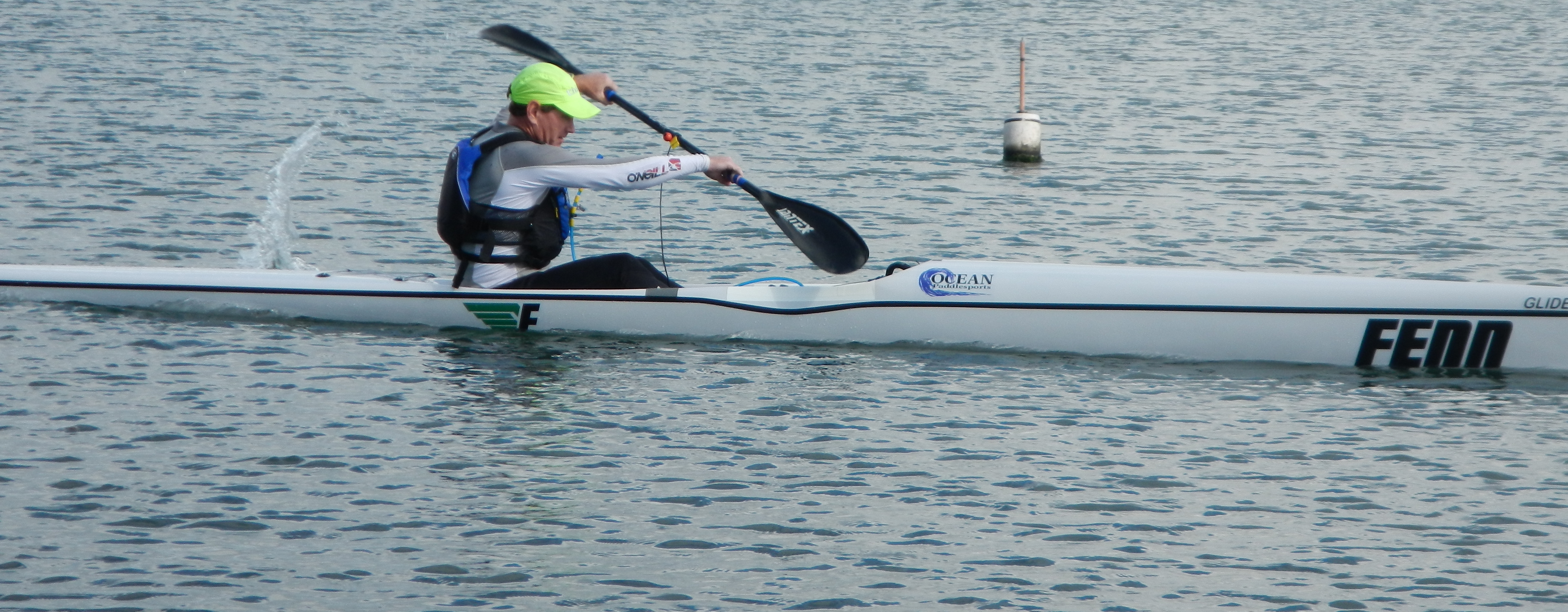
The stroke catches and the boat runs. There is a feeling to it, a brief firmness in the water that holds long enough for the body to push through, and the boat moves with more economy than it did on the stroke before. Paddlers sometimes describe a boat as “running” on good days and “dragging” on bad ones, and they often attribute this variation in performance to conditions or weeds, or the hull. Some of it is conditions. Very little of it is the hull. There are hardly ever weeds. The major factor at play is the paddler. Pity the fool.
The efficiency of force transmission changes with fatigue, cold, stability on the water, and the structural capacity available in that moment. The equipment is the same. The chain is different.
When the chain is working well, there is a noticeable quality to the effort. The catch is quiet. The draw is smooth. The exit is, well, nothing. The total stroke feels shorter and more complete. Resistance in the water translates directly into efficient forward momentum, rather than loading up your arms.
This is the most immediate mechanical fact of surfski paddling. The paddle is not the propellant. It is a fixed point in the water. When the paddle blade catches well, that fixed point holds, and the drive from the hips and torso, the focused pressure on the footplate, translates directly into forward momentum. When the catch doesn’t hold, the effort still happens. The muscles fire, the joints load, the energy is spent, but not transferred.
What determines whether force transfers involves more than technique, though technique is certainly part of it. It involves whether the body has the strength and structural integrity to transmit the load from the point of contact in the water, up the shaft, through the hands and arms, into the core, down the lower body, onto the footplate, and finally out through the hull. Every connection point in that chain is either transferring the force or dissipating it. Weakness anywhere in the chain means losing energy that was meant for propulsion.
In flat water, a paddler can compensate for this in part by increasing stroke rate. More strokes means more attempts to catch, and partial catches add up. In rough water or when conditions require responsive adjustments, accelerating through a section, holding position in confused chop, pushing through a closing gap in a race, the compensation breaks down. There is no time to add extra strokes. The force either goes into the boat cleanly in that stroke, or the moment is gone.
This is why paddlers with less strength often overwork in conditions that demand responsiveness. The effort is real. The output is genuine. But the fraction of that effort actually moving the boat is smaller than it should be, and the body compensates by working harder for the same or lesser result. Fatigue arrives sooner not because the load is greater but because so much of the load is disappearing inside the chain before it gets anywhere useful.
On a day when the catch is clean and the chain is strong, paddling feels like getting something for free and we feel positively heroic. This is what brings us back for more, over and over again.