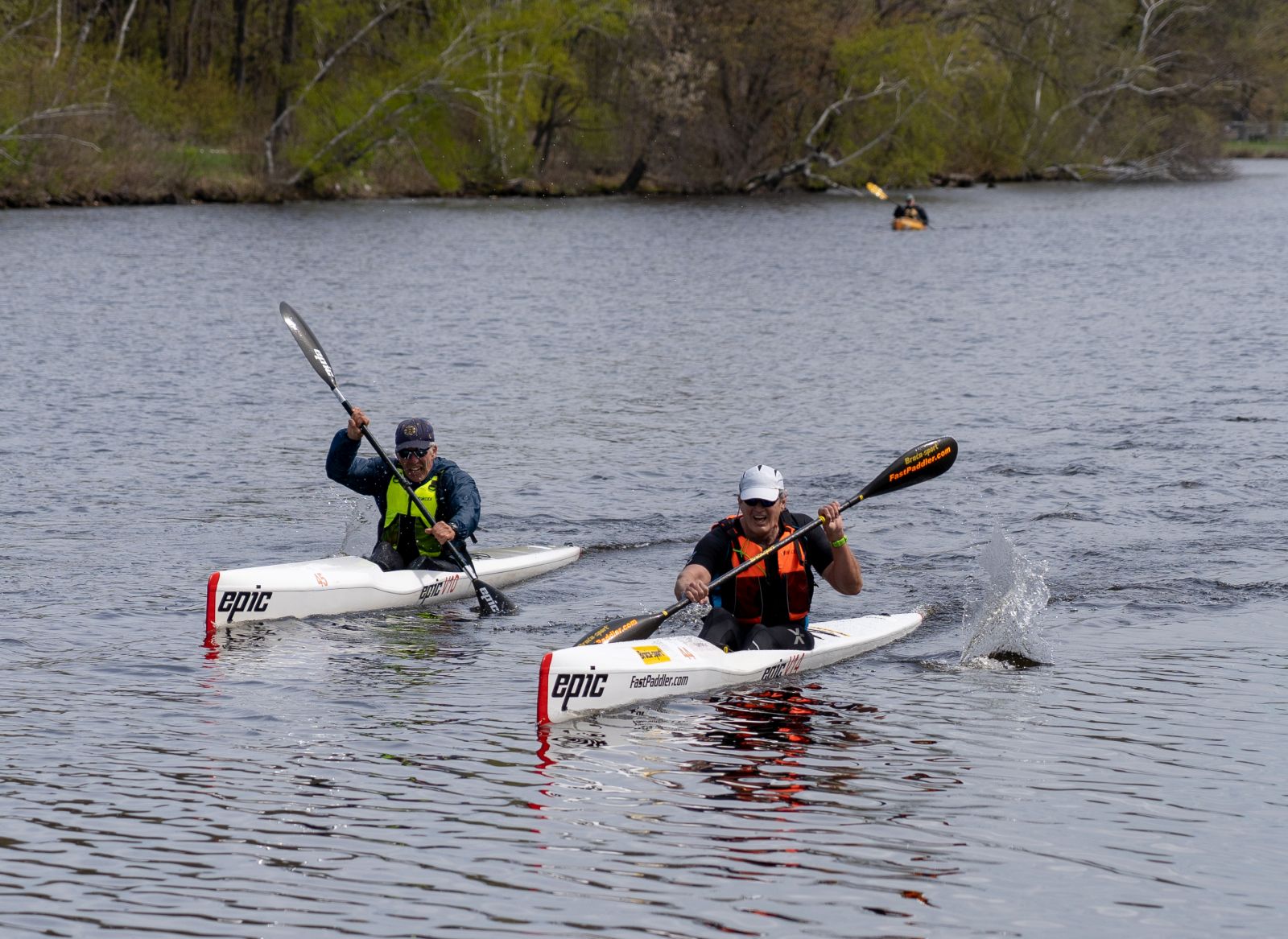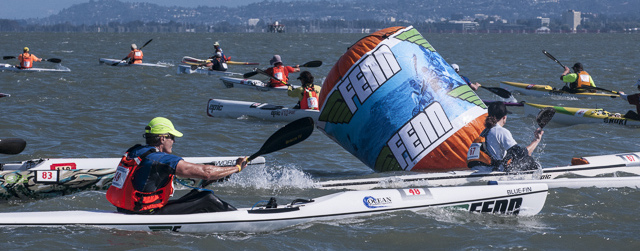
Races are rarely decided in the long, steady sections where paddlers settle into rhythm. They turn instead on brief moments of compression—approaching a buoy, rounding a mark, accelerating after a turn, or managing a transition from one condition to another. These moments are short, but they magnify both good and bad decisions.
The most common mistake at turns is arriving too fast and too late. Paddlers sprint into crowded water, lose clean lines, and then bleed speed while others exit smoothly. A good turn begins well before the mark, with positioning that favors space over proximity. Giving up a meter early is often cheaper than fighting for it when options disappear.
Marks also reveal discipline. Many paddlers fixate on the buoy itself rather than the water beyond it. The goal is not to touch the mark tightly, but to leave it already moving in the correct direction. Exits matter more than entries. The paddler who accelerates cleanly out of the turn often gains more than the one who arrived first.
Transitions are similar, though less obvious. Wind shifts, current changes, and the move from protected to exposed water all demand adjustment. The paddler who recognizes these shifts early changes cadence, posture, or line before effort spikes. The paddler who reacts late pays for it in forced acceleration or instability.
Even finishes fall into this category. A beach run-up, a shallow-water sprint, or a crowded final approach rewards those who have rehearsed restraint as much as speed. Panic at the end rarely creates time; it usually wastes it.
These moments feel minor because they are brief. In reality, they are where races quietly change shape. Once past them, the field often looks different than it did moments before. How paddlers interact with each other in these tight spaces—what they take, what they yield—raises another question entirely, one that many avoid but every experienced racer understands.