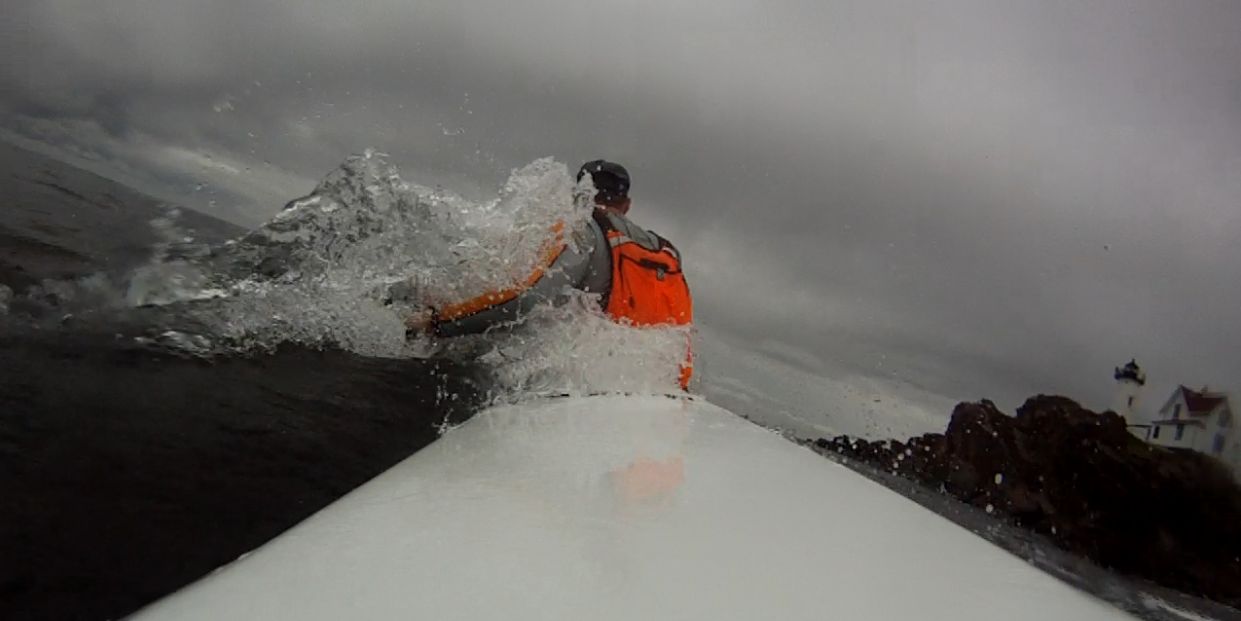
Every downwind community has paddlers who seem disproportionately effective in familiar conditions. They are not always the youngest or the strongest, and they may not stand out in flatwater sessions. Yet when the ocean turns on, they are suddenly difficult to stay with. This pattern can be frustrating for paddlers who train hard and expect fitness to decide outcomes. Over time, though, it becomes clear that something else is at work.
The evidence shows up in how consistently these paddlers choose good lines. They appear to know when to move offshore, when to stay inside, and when to angle across the wind rather than commit straight downwind. They are rarely surprised by sections of the run that feel slow or awkward to others. Instead of reacting to each moment, they seem prepared for what is coming, even when the surface looks unsettled.
What looks like instinct is usually accumulated pattern recognition. After enough time on the same body of water, paddlers begin to associate certain wind directions, swell angles, and tide states with predictable behaviors. They learn where energy tends to persist and where it tends to collapse. They also learn which signals can be ignored. This knowledge allows them to make earlier decisions and avoid wasted effort, even if they are not consciously analyzing each factor as they paddle.
This explains why experience can outweigh fitness in the ocean. A strong paddler who commits repeatedly to short-lived energy will work hard for limited return. A slightly less fit paddler who avoids those traps may arrive sooner and with more left in reserve. The difference is not talent so much as familiarity. Local knowledge reduces uncertainty, and reduced uncertainty allows momentum to be managed rather than constantly recovered.
Rather than viewing this advantage as mysterious or unreachable, it can be helpful to see it as something that accumulates through attention. Every run adds to a personal catalog of how the ocean behaves in that place. In the final article of this series, we will look at the mental side of this process and how experienced paddlers begin to read not just what the ocean is doing now, but what it is likely to do next.