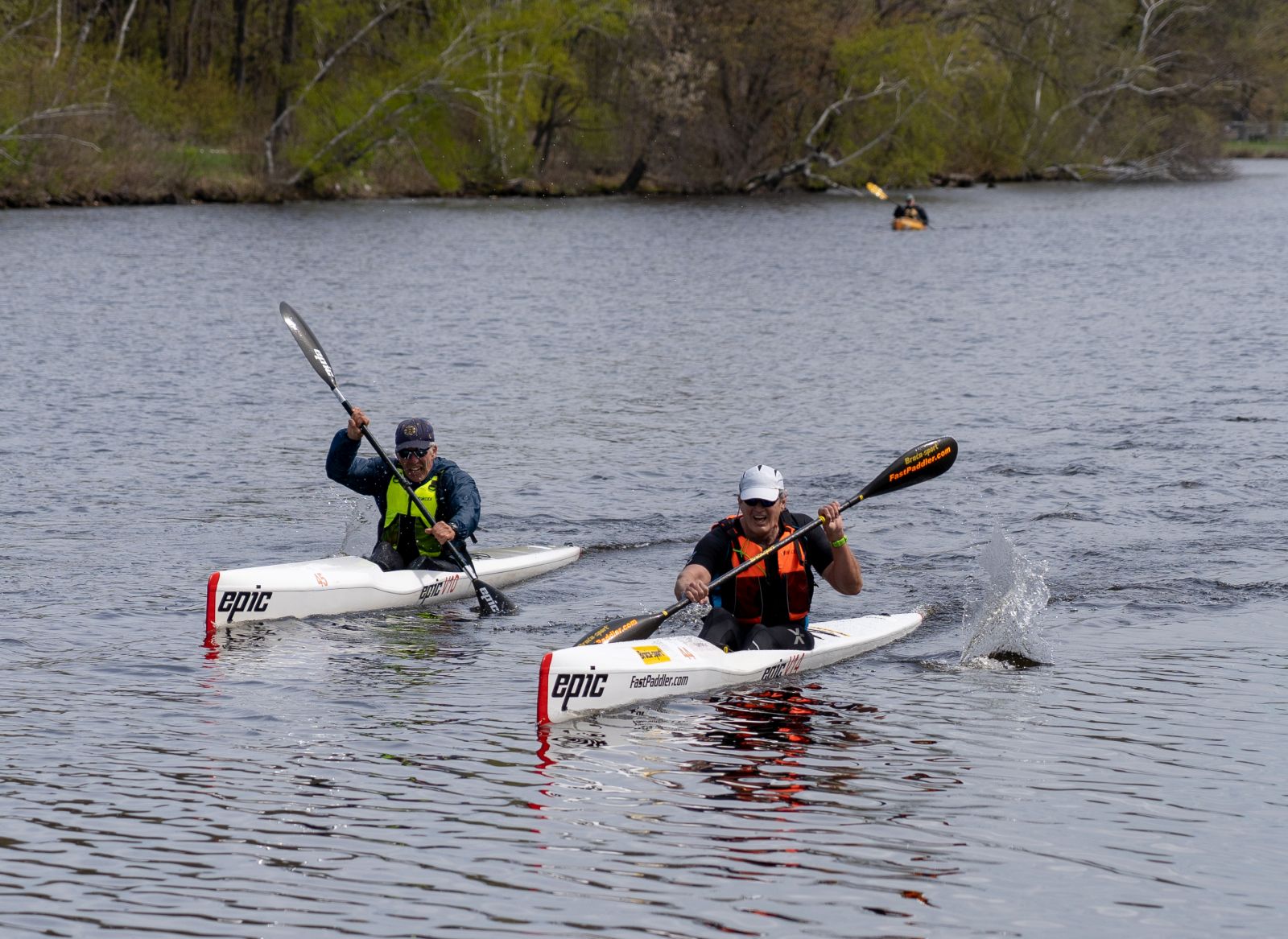
Many athletes think racing is mainly about physical fitness. They train harder, go longer, and arrive at the start line believing the strongest engine will win. Of course, sometimes it does. But more often than not, it doesn’t. Ocean racing, especially in surfskis, rewards the complete operator: people who have cultivated the capability to make good decisions while tired, distracted, and surrounded by other athletes gunning for the same result you are.
Racecraft is the cultivation of the myriad skills and abilities to be able to make those decisions. Where you line up. Who you follow. When you stop chasing. When you turn. When you take risks. When you let the race come to you. The totality of your choices impacts your results more consistently than putting in one more interval session. Two paddlers with similar fitness can finish minutes apart because one conserved energy when it mattered and the other spent it too early. When one changed course and the other held their line.
This is why races rarely unfold the way people imagine them beforehand. The plan formed on shore collides almost immediately with wind shifts, uneven packs, and the psychology of competition. Paddlers surge when they shouldn’t. Hesitate when opportunity appears. The race evolves, and those who are able to adapt, rather than cling to their script, remain in contention longer than their physical fitness alone would suggest.
A common mistake is treating race day as a public test of physical training rather than a dynamic problem to solve. Racing is only partly about proving how hard you can go. It is also about arriving at decisive moments with enough physical, mental, and emotional reserve to act deliberately. The paddler who understands this is often quieter at the start, less reactive mid-race, and more competitive at the finish.
This series is about cultivating your quiet advantage. It’s about understanding how ocean races actually unfold, and how experienced paddlers learn to move through these experiences efficiently and successfully. The next article begins where every race starts: on the line, the minutes before the horn, and the choices that shape everything that follows.