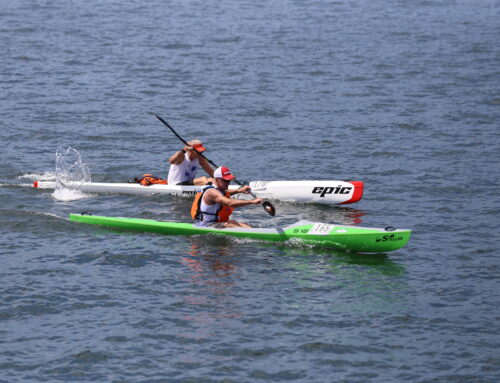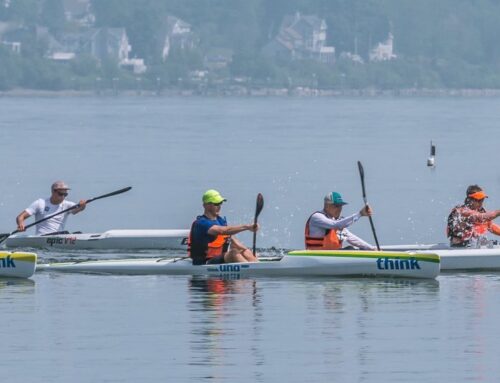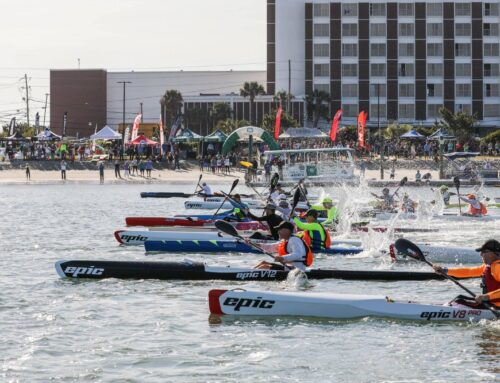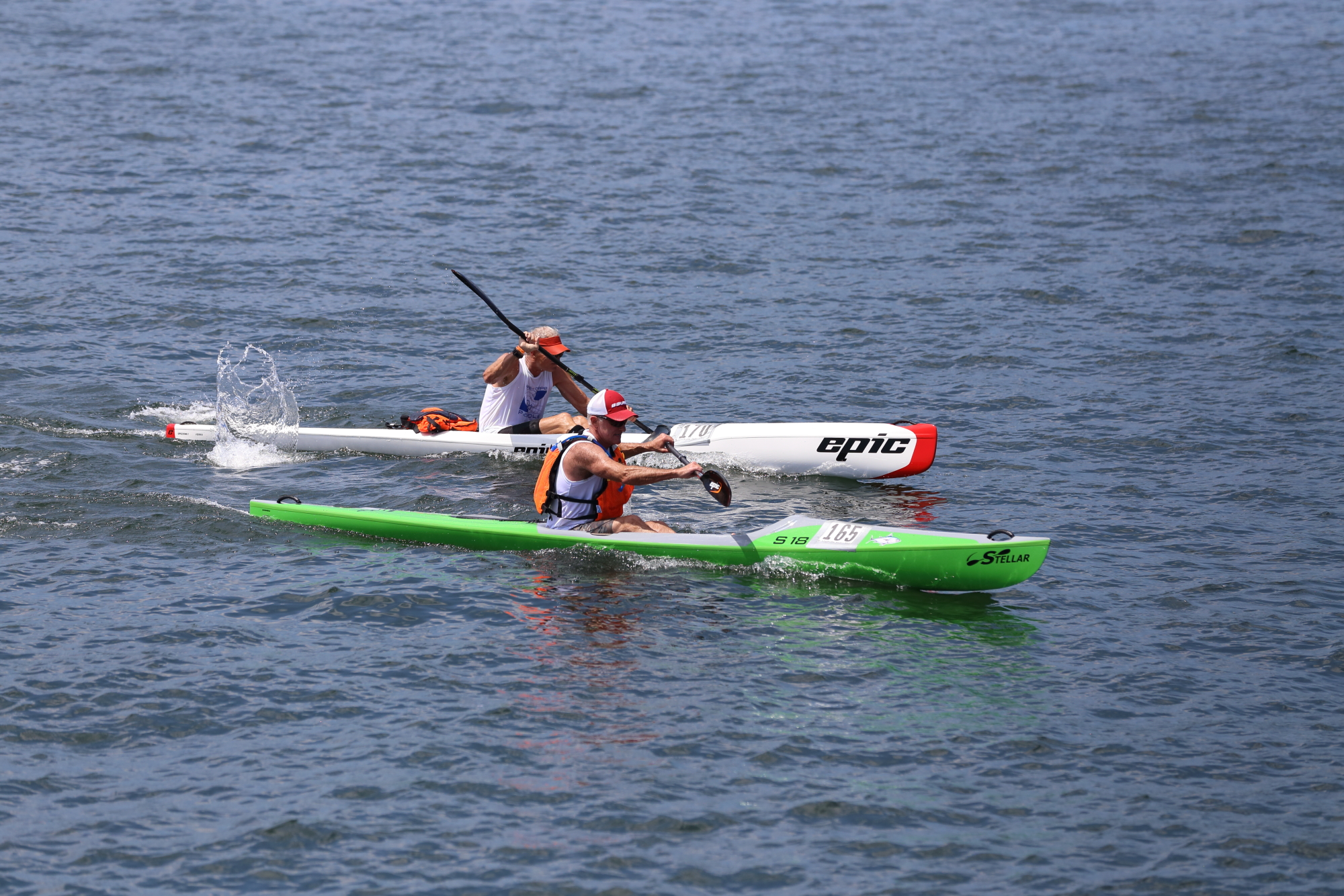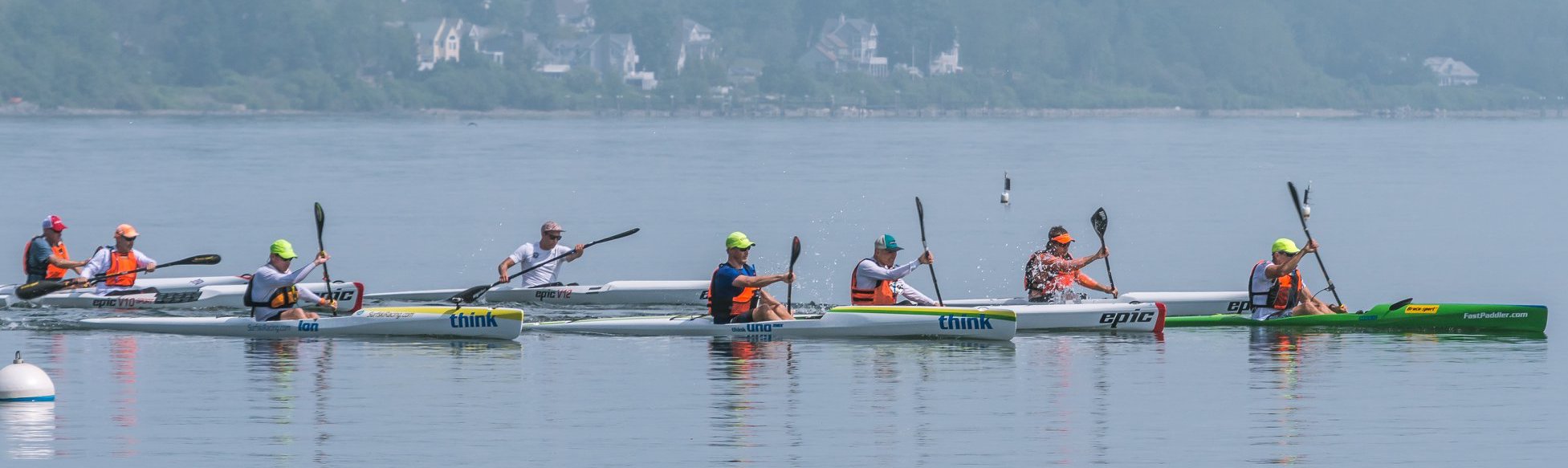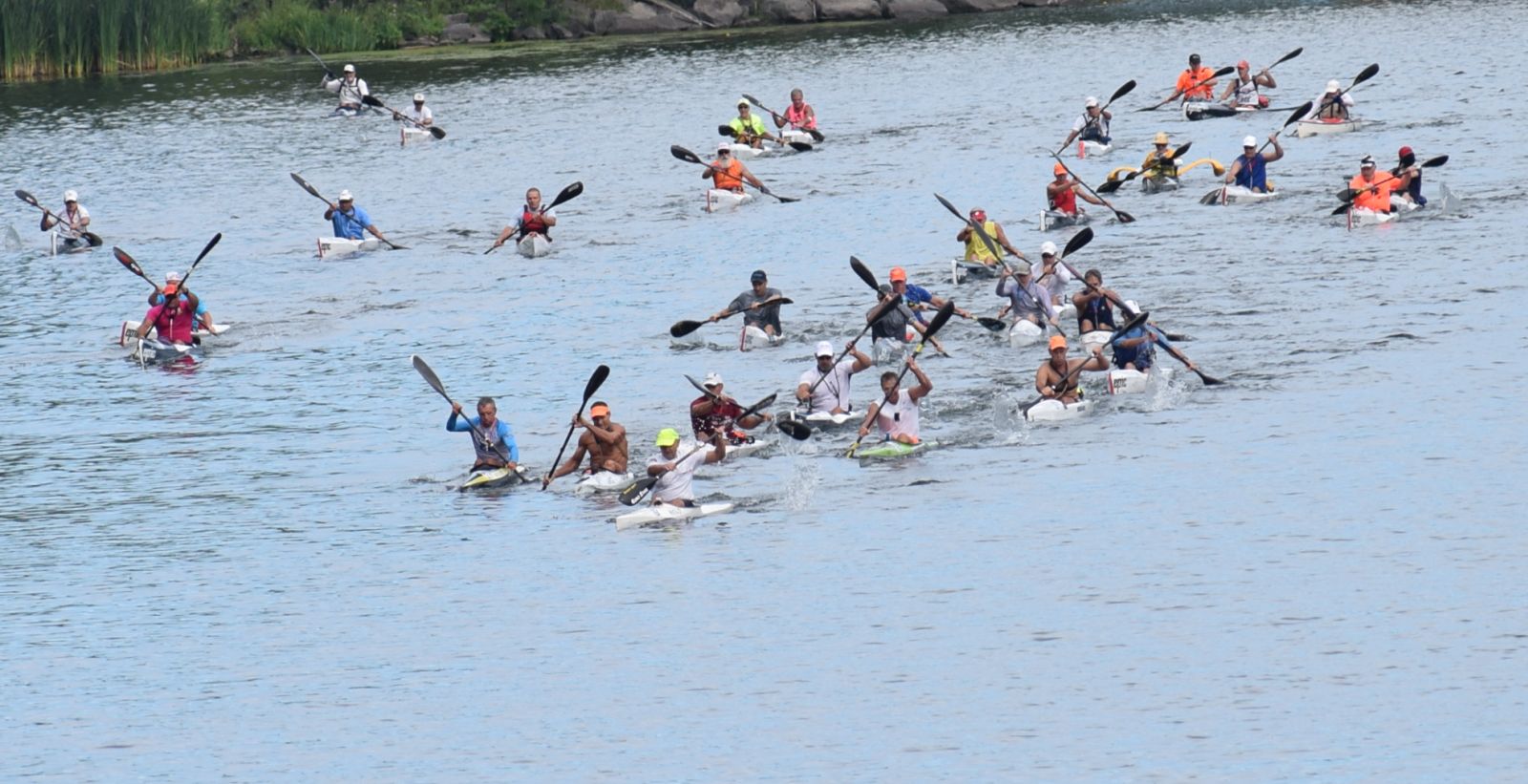
Once the race settles, very few paddlers are truly alone. Packs form quickly—sometimes by intention, sometimes by accident—and they become the dominant force shaping effort, speed, and outcome. Understanding how packs work is one of the most important racecraft skills, and one of the least formally taught.
A pack is not just a group of paddlers moving at the same speed. It is a shared system of energy exchange. Drafting reduces effort, but it also constrains freedom. The water you can use narrows. Your line is influenced by others. Small changes in pace ripple through the group. Paddlers who recognize this early tend to stay calmer and waste less energy fighting dynamics they cannot control.
Many races are lost by paddlers who misunderstand when to engage with a pack and when to disengage. Sitting in too long can leave you boxed in or carried onto a bad line. Leaving too early often means spending far more energy than you recover. The decision is rarely about strength alone. It is about whether the pack’s direction, rhythm, and composition align with your race—not whether you feel capable of paddling harder in that moment.
There is also a psychological component. Packs create false urgency. A small surge feels decisive even when it is not. A gap looks catastrophic even when it is manageable. Experienced racers learn to distinguish between meaningful separation and temporary elastic stretching. They respond selectively, not reflexively.
Good pack paddlers are not passive. They hold position without constant acceleration, choose feet deliberately, and move laterally before they are forced to. They understand that efficiency inside a group is an active skill, not something granted automatically by proximity. Done well, pack paddling feels smooth. Done poorly, it becomes a constant series of corrections that quietly drain the tank.
Eventually, every pack changes—splitting, merging, or dissolving as conditions evolve. The paddlers who are still thinking clearly when that happens are the ones with options. Managing effort inside a group is inseparable from managing effort overall, which brings us to pacing: not as a number on a watch, but as a strategic choice made repeatedly across the race.